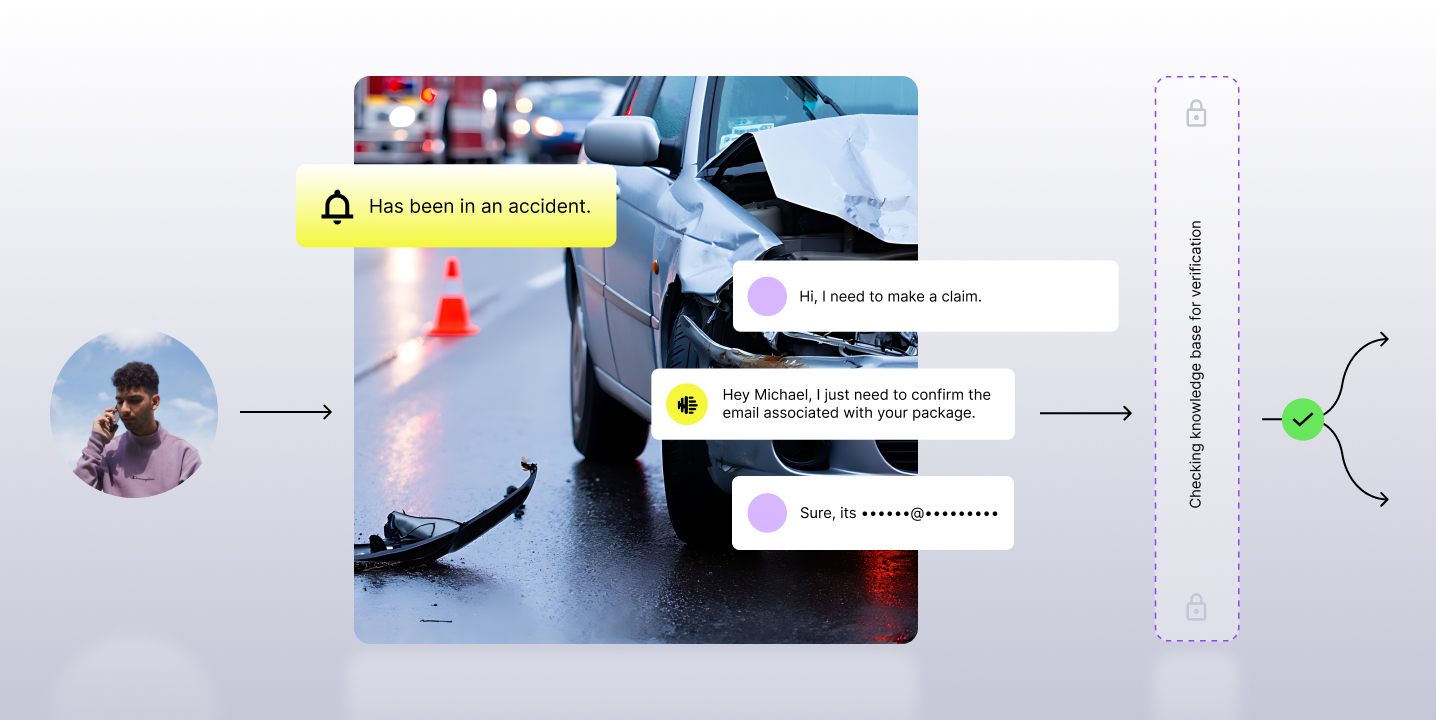
Supporting Claims Adjusters in Complex Moments: Why Real-Time Guidance and Full-Coverage Visibility Matter
Claims adjusters are the backbone of any insurance operation. They handle the most critical moments in a customer’s life—when a house burns down, a car is totaled, or a business-critical asset fails. Yet despite their crucial role, adjusters across the industry report feeling the same way: overwhelmed, underpowered, and struggling to balance speed with accuracy.
The pressure is mounting. Rising claim volumes, sharper regulatory scrutiny, and increasingly severe weather events are stretching operations in ways that legacy processes simply can’t absorb. Adjusters are juggling manual intake, tedious documentation, compliance gaps, and the constant fear of missing something critical—whether that’s a coverage disclosure, a fraud indicator, or a documentation requirement that could expose the carrier to risk.
What many insurance leaders don’t realize is that the solution isn’t just about working harder or hiring more staff. It’s about transforming how adjusters work and the tools they rely on. And it starts with addressing two fundamental gaps: lack of real-time guidance during complex interactions, and lack of visibility into what’s actually happening across the operation.
The Gap Between Knowledge and Execution
A claims adjuster might know exactly what disclosure is required or what script the company requires for policy explanations. But in the high-stress moment of a claim call—especially a complex one—that knowledge can slip away. A customer is frustrated. The situation is emotionally charged. The adjuster is juggling multiple systems to find information. In that moment, compliance adherence often falls short.
Traditional QA approaches try to catch these gaps after the fact. Supervisors review 1-2% of calls, provide feedback days later, and hope the lesson sticks. By then, dozens of other calls have already been handled, each potentially missing the same disclosure or compliance step.
Real-time guidance changes this equation. An AI Copilot that monitors calls in the moment—listening for missed disclosures, detecting when an explanation is incomplete, or flagging when tone shifts in a way that suggests the customer is losing trust—can prompt the adjuster immediately. A gentle alert surfaces the issue while the call is still happening, giving the adjuster the chance to correct the course right then.
This isn’t about surveillance or second-guessing. It’s about support. It’s about saying to an adjuster, “Hey, you haven’t mentioned the deductible yet—would you like to cover that now?” Or, “The customer sounds frustrated—would a brief empathy statement help?” The research is clear: adjusters welcome this kind of guidance because it makes them better at their job, and it keeps them from discovering mistakes after the call is over.
Why Full-Coverage Visibility Matters More Than You Think
The second gap is visibility. Every insurance operation has quality assurance processes, but here’s the problem: traditional QA creates blind spots. When you only sample 1-2% of interactions, you catch the obvious problems but miss the systemic ones. You don’t see the pattern where a specific type of claim consistently has incomplete documentation. You don’t catch the tone consistency issue that only shows up with one adjuster. You don’t spot the subtle fraud indicators that become obvious only when you see 100 calls instead of 1.
Conversational Intelligence that analyzes every single call reveals what’s really happening. It doesn’t require manual listening—it automatically surfaces documentation gaps, flags unusual patterns, detects tone shifts and language inconsistencies that might suggest fraud, and tracks compliance adherence across your entire operation.
This matters especially during seasonal spikes and weather events. When a hurricane hits and claims volume explodes, you can’t wait for next month’s QA report to discover that half your team is missing critical steps. With full-coverage visibility, you see the issue in real time and can deploy targeted coaching before the backlog gets worse.
The Ripple Effect on Adjusters and Customers
When adjusters get real-time support during calls, two things happen. First, they make fewer mistakes, which reduces rework and keeps claims moving faster. Second, they feel more confident and supported, which reduces burnout and turnover—a critical issue in an industry where experienced adjusters are hard to replace.
And when supervisors have visibility into every call, they stop spending their time hunting for calls to review and start spending it where it actually matters: coaching their team on patterns they’re seeing, updating processes based on real data, and making strategic decisions with full visibility into what’s working and what isn’t.
Customers feel this shift too. Adjusters who are guided toward better empathy, clarity, and consistency deliver better experiences. Claim cycles shorten because documentation is complete and accurate the first time. Adjusters who feel supported are more patient with difficult customers. The whole operation accelerates.
From Reactive to Proactive Operations
The insurance industry has long operated in a reactive mode: something goes wrong, it gets discovered (ideally), it gets fixed, and you hope the lesson sticks. But complex moments don’t have time for reaction. They need the operation to be proactive—anticipating what adjusters will need, supporting them in real time, and catching issues before they compound.
This is the path forward for claims operations under pressure. AI Agents handle the repetitive intake and status work, freeing adjusters to focus on the complex claims that need human judgment. AI Copilot provides real-time guidance during those high-stakes interactions. Conversational Intelligence delivers full-coverage visibility so supervisors and QA teams can coach and optimize based on actual data, not assumptions.
The result isn’t just faster claims or fewer errors. It’s an operation where adjusters feel empowered instead of overwhelmed, where supervisors have visibility instead of blind spots, and where customers experience consistent, empathetic service during stressful moments.
Supporting adjusters in complex moments isn’t a nice-to-have. It’s the foundation of a modern, scalable claims operation.
Ready to Transform Your Claims Operations?
The path from overwhelmed to empowered requires more than good intentions. It requires the right strategy, the right tools, and the right approach to implementation.
Our ebook, Clearing Bottlenecks in Claims Operations, walks you through the specific operational challenges that slow claims processing, limit adjuster effectiveness, and create compliance risk. You’ll discover where bottlenecks hide, why they’re harder to spot than you think, and how leading carriers are using AI-powered automation, real-time coaching, and full-coverage visibility to move faster and with greater confidence.
Whether you’re struggling with claim cycle times, compliance gaps, or adjuster turnover, this guide provides actionable insights and a framework for modernizing your operation.
Download the ebook today and discover how to clear the bottlenecks holding your claims operation back.
Subscribe to our newsletter.
Frequently Answered Questions


.jpg)

.png)
.jpg)