AI + CX: Where it is, and where it needs to be
For anyone who works in the CX space, the big question is how will customer interactions, and the customer experience change because of AI? What we know for sure right now is that how they should be, and how they are today, are worlds apart.
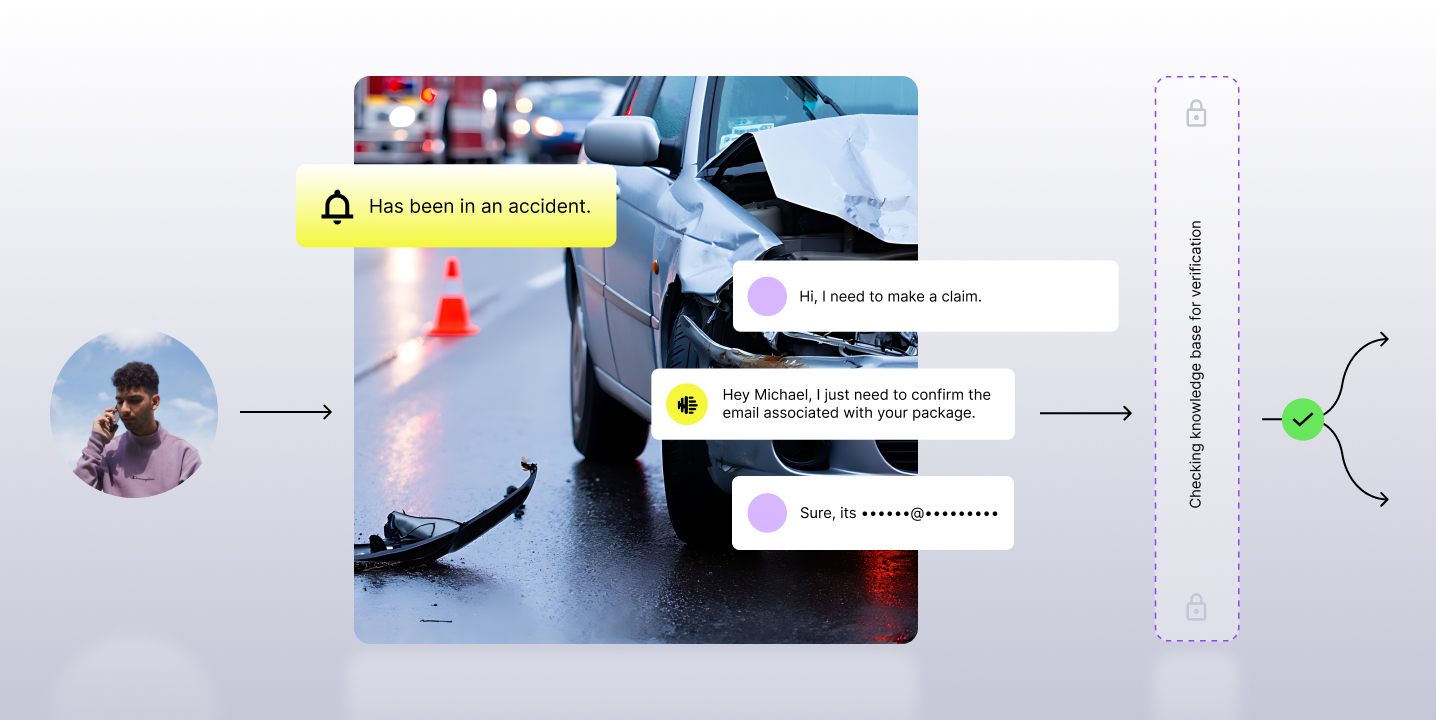
Where AI and CX actually need to go is agentic AI in the contact center: AI agents for contact centers that can carry out an entire customer conversation from start to finish, not just support a human agent through part of it. Today, most AI in the contact center still plays a supporting role, prompting agents, summarizing calls, or deflecting simple requests to a bot. Agentic AI contact center deployments move past that starting point. These AI agents can understand what a customer needs, take action across the backend systems required to resolve it, and complete the interaction on their own, while still recognizing when a case calls for a human agent’s judgment. That is the direction this shift is heading, and it changes what good CX and good agent experience both mean going forward.
How AI is changing CX today, and where it’s going
If we look at how AI has changed the contact center to date, the most prevalent use case is automation, primarily with a goal of call deflection - utilizing self service and chat bots to steer customers away from conversations with agents.
Strategies around call deflection do bring some benefits. In the simplest terms, they reduce costs (at least in the short term) since an automated customer service channel can interact with a higher number of customers at the same time. But we’re starting to see a clear trend where these front-end automations can create significant customer frustration, leading to additional expenses and lost business that far outweigh the benefits of the initial cost savings.
So the major difference between what we’re seeing today and the trends of tomorrow are that more and more businesses are moving away from a goal of replacing human agents, towards efforts to augment them with AI for faster resolution and better CX .
This is where agent assistance and assisted interactions come into play, automating simple tasks, while elevating the interactions taking place in realtime. The AI-backing the agent can stream helpful information, metrics, or analytics to the agent in the moment to expedite resolution, minimize transfers, and reduce frustration for both the customer and the agent - even for the most complex inquiries.
The secret to success with AI
The promise and the perceived benefits of backing your agents with AI is huge. That’s why we see so many companies today approach their AI investment with no more strategy than simply:
“We have to do something with AI to improve performance.”
And it’s true that by integrating AI services into your business, you can operate more effectively and efficiently. But it’s not plug and play. Success rests on how you integrate and improve the technology over time.
And for contact centers, the reality is that we need to look at each and every customer, understand their individual experience, and identify precisely where we can deliver efficiencies and add intelligence. That’s how you deliver better performance
This could be as simple as automating rule-based interactions, like balance transfers or paying off a credit card. But in other cases, we need agent assistance. Or we suddenly have two thousand agents working from home need to understand how they’re performing in realtime, and how to staff and allocate them based on demand, or specific patterns and use cases that arise.
That’s the power of intelligence to help inform realtime, data-driven changes in the moment, instead of after the fact.
From reactive to proactive
We’ve had technology for analytics and reporting in the call center space for decades. But up until this point, they were all retroactive. Once a business problem was identified, we needed to figure out what we did to create that problem, then figure out how to fix it moving forward.
With AI, we can be much more proactive. We can find and create solutions as problems or inefficiencies emerge, rather than after they’ve created a more serious issue.
What AI agents for contact centers look like today
The call deflection bots, agent assist prompts, and post-call analytics described above still depend on a human agent to close out the interaction. AI agents for contact centers work differently: they can pull account details, apply policy, complete a transaction, and confirm the outcome with the customer inside one AI-led conversation, escalating to a person only when judgment or an exception is required. The same AI agents work across voice and chat, and what they learn from each interaction feeds back into coaching for the human agents handling similar cases. That is the practical difference between AI assisting a conversation and AI agents running one.
Wrapping up
There’s a persistent myth that AI will eventually eliminate the need for humans in the workplace. But it’s clear for now that not only will humans be needed for the foreseeable future, but that as we automate more of the simple, repeatable, and mundane tasks, our people will be faced with increasingly complex inquiries and issues, which is exactly where the true power of AI can be applied to improve the experience for our customers and our employees.
Human interaction will always be dependent on a combination of objective and subjective variables. And one day, AI may be able to truly master the nuances of insight, empathy, and emotional intelligence - but until then, cutting-edge intelligence still requires a human touch.
Subscribe to our newsletter.
Frequently Answered Questions
AI agents for contact centers are AI systems that can carry out a full customer conversation on their own: understanding what the customer needs, taking action in the backend systems required to resolve it, and completing the request without a human agent, while still escalating complex or sensitive cases to a person.
Earlier AI+CX tools like chatbots and agent assist support a human-run conversation, deflecting simple requests or surfacing information to an agent in real time. Agentic AI contact center deployments go further: the AI agent itself carries the conversation from start to finish and hands off to a human only when the situation requires it.
AI+CX is moving toward agentic AI: AI agents for voice and chat that handle full customer conversations, plus AI agents for operations that evaluate interactions and generate coaching and insights for both human and AI agents. That combination, not simple automation, is what defines the next stage of contact center AI.


.jpg)

.png)
.jpg)