A Practical Guide to Structuring Knowledge for AI Agents
Most enterprise leaders understand that AI agents are only as good as the knowledge they rely on. Yet when AI agent pilots stall or underperform, the diagnosis is often vague: the model needs tuning, the prompts need work, the technology isn’t ready.
In practice, the problem is usually much more familiar. The knowledge is not built for AI consumption.
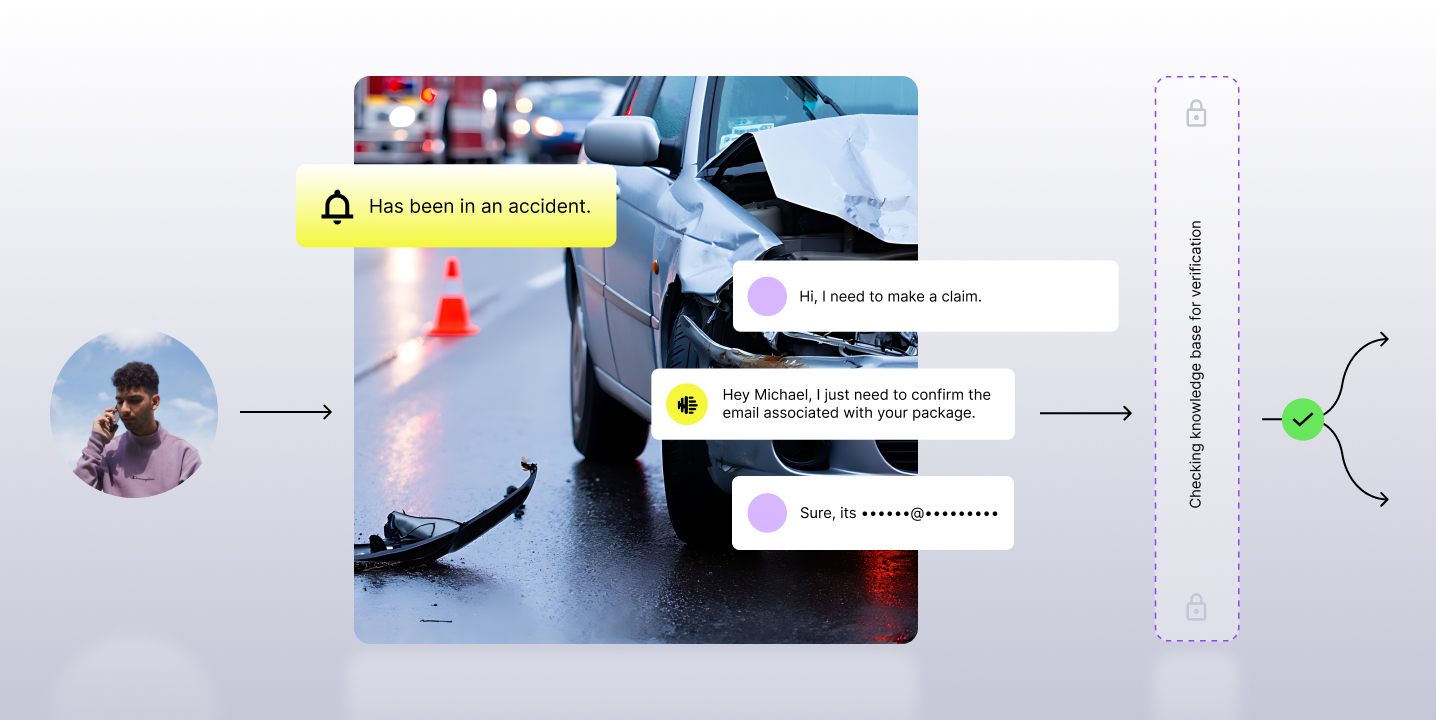
This is not because key information is missing, but because most knowledge bases were created long before AI agents were part of the equation. Therefore, the information is not structured so that systems can easily find, parse, and use the key details. These articles were designed for human consumption and therefore require nuance, explanation, and cross-referencing. Autonomous conversational systems, unlike humans, require explicit structure and rules they can reliably execute.
This is not a call to maintain two parallel knowledge bases, one for humans and one for AI. That approach rarely works at scale and becomes painful to maintain almost immediately. The real opportunity is to refactor existing knowledge so it can be consumed by any entity: human agents, voice agents, chat agents, and whatever channel comes next.
When knowledge is structured correctly, the agentic framework, orchestration layer, and retrieval pipeline can do the rest.
What follows is a practical roadmap for evolving your knowledge base into shared infrastructure for humans and AI agents, without requiring a ground-up rebuild.
Step 1: Accept That Most Knowledge Was Never Designed for Machines
Enterprise knowledge bases were built with good intentions. Articles are often long, narrative, and context-rich. They include background explanations, cross-references, edge cases, and polite disclaimers that humans can interpret on the fly.
Humans are good at filling in gaps. AI agents are not.
This does not mean you need “AI-only” articles. It means your existing articles need to be refactored so the core logic is explicit rather than implied. The same article should support:
- A human agent scanning for guidance during a live call
- A VoiceAI agent executing a task end-to-end
- A chat or email agent responding asynchronously
- Future agents that reuse the same logic in different channels
The shift here is mental more than technical. Knowledge stops being prose meant only for reading and becomes structured guidance meant for execution. Making that shift early prevents months of trying to compensate with prompts and post-processing.
Step 2: Start With Knowledge That Actually Drives Conversations
Not all knowledge needs to be refactored at once. The highest return comes from information already at the center of customer interactions.
A practical place to start is your highest-volume, lowest-variance scenarios:
- Appointment scheduling rules
- Eligibility and verification logic
- Status checks and next steps
- Policy explanations that customers ask about repeatedly
Instead of asking, “Which articles should we convert for AI?” ask a simpler question:
“What do our best agents explain, confirm, or enforce repeatedly throughout their day?”
That knowledge has already been validated in production. Refactoring or applying an AI-consumable portion gives you the fastest path to reliable AI agent performance.
Step 3: Refactor Articles Around Decisions, Not Narratives
One of the most common failure points in AI deployments is treating full articles as atomic units and hoping the model “figures it out.” That may work in a demo. It does not scale. Why? Because during one-offs, the AI can navigate the knowledge with clear inputs guided by known outcomes. But when customers call, their unpredictability and nonlinear thinking will test the AI agent’s ability to determine when direct, concise information is required to provide consistent information and outcomes.
Refactored knowledge should make decisions explicit within the article itself:
- Conditions and eligibility criteria
- Required inputs and valid ranges
- Allowed and disallowed actions
- Next steps and escalation rules
For example, instead of a single narrative article on “Address Changes,” a refactored article clearly separates:
- What qualifies as an address change
- What validation is required
- When the request can be completed automatically
- When it must be escalated
- What confirmation language is required
Humans still read the article top to bottom. AI agents consume these sections as discrete, executable units. You end up with one artifact that serves both.
Step 4: Encode Guardrails Inside the Knowledge Itself
Concerns about AI control are usually framed as a prompting problem. In reality, they are almost always a knowledge design problem.
Well-structured knowledge includes guardrails directly in the content:
- What the agent can say
- What it must never say
- When it must escalate
- How uncertainty should be handled
In human organizations, this logic lives in training, shadowing, supervision, and intuition. For AI agents, it should live in the knowledge layer.
When guardrails are explicit, AI agents become predictable, governable, and auditable. That predictability is what allows teams to move beyond pilots and into production.
Step 5: Structure Knowledge for Retrieval, Not Just Reading
As soon as AI agents enter the picture, knowledge is no longer accessed linearly. It is retrieved, chunked, ranked, and recomposed through a downstream pipeline, often using retrieval-augmented generation (RAG).
That has implications for how articles are written:
- Sections should be logically self-contained
- Headings should reflect decisions or actions, not themes
- Redundant context should be minimized
- Definitions and rules should be explicit, not buried in prose
This does not require deep expertise in RAG architectures. It requires awareness that knowledge will be consumed in pieces, not pages. Articles that are structured for AI consumption are easier to chunk, retrieve, and reuse across channels without rewriting the underlying logic.
Step 6: Design Knowledge to Improve Over Time
One reason teams hesitate to refactor knowledge is the belief that it must be perfect before AI agents go live. That standard is neither realistic nor necessary. Utilizing the approach of knowing what knowledge is most used by current human agents and starting in this place gives you a scalable and manageable methodology for growing your knowledge to improve over time.
When taking on this challenge, refactored knowledge should be treated as a living system. What does that mean?
- Versioned rather than static: As the AI system consumes new articles, you can see what article was used in conversation and how it was interpreted. If an AI agent gets something wrong, you can neatly roll it back to a previous version.
- Measurable rather than assumed: Clean insights in which articles are used for which intents and mapped to outcomes. This gives you a clear line of sight into impactful content and prevalent customer sticky points.
- Continuously improvable rather than frozen: AI systems are not static. As you refine your AI agents, you can also improve your knowledge by streamlining the structure, adding more knowledge to the AI system’s repository, or creating new knowledge articles to address different use cases or edge cases.
Once AI agents are in production, evaluation and reporting quickly surface where knowledge is unclear, incomplete, or too restrictive. This creates a feedback loop where real interactions drive refinement.
At this point, knowledge management starts to resemble product operations more than documentation maintenance.
Step 7: Scale Across Agents and Channels
Once a core set of refactored knowledge is performing well, scaling becomes straightforward:
- Expand to adjacent intents and workflows
- Reuse the same logic across voice, chat, and email
- Apply consistent governance enterprise-wide
Because the knowledge is shared and structured, you avoid maintaining separate rule sets for each channel or agent type. This is how organizations move from a single AI agent to a coordinated AI agent workforce without losing control.
The Bigger Shift Program Leaders Should Recognize
This approach is not just about supporting AI agents. It reflects a broader change in how knowledge is treated inside the enterprise. Knowledge is no longer just a support artifact. It is the operational infrastructure. Process guides no longer just support onboarding or complex problems, while leaving a human to figure out the rest. These articles are the backbone of any AI-led organization.
Teams that recognize this early refactor once and build on that foundation. Teams that don’t often end up maintaining parallel systems, endlessly tuning prompts, and blaming models for problems rooted upstream.
One Knowledge System, Many Consumers
You do not need two knowledge bases. You need a knowledge system designed for human and machine consumption alike. Start with a narrow, high-confidence use case. Refactor articles to make decisions explicit. Encode guardrails directly. Structure content so it can be retrieved and reused. Let your agentic framework handle execution across channels.
If you are already investing in knowledge for human agents, this is not a reinvention. It is a practical extension. Once that practice is in place, AI agents stop being experiments and start behaving like reliable members of the operation.
That is the difference between demos that sound good and systems that perform in production. If you’re ready to start automating your customer conversations so your agents can focus on impactful work, it’s time to chat.
Subscribe to our newsletter.
Frequently Answered Questions



.png)
.png)
.png)