5 ways contact centers are accelerating revenue growth with AI
Contact centers are transforming from cost centers into revenue generators. In fact, according to our Post-Pandemic Contact Center report, 64% of contact center leaders already believe they are revenue generators, and 85% plan to be by the end of this year.
This shift is accelerating as contact centers deploy AI agents built to work alongside human teams, not just monitor them after the fact. Unlike traditional quality programs that review a small sample of calls, AI agents for contact centers analyze every voice and chat interaction, so revenue signals don't get missed. The result is agentic AI contact center technology that consistently surfaces upsell opportunities, compliance gaps, and coaching moments at a scale manual review can't match. For growth-focused leaders, this makes revenue growth a natural outcome of better visibility into every conversation, not a separate initiative to manage.
The biggest driver behind that shift is artificial intelligence and the vast ways in which it can help leaders marshall data to coach teams, personalize customer experiences, drive better business outcomes, and unlock insights.
The future looks bright for growth-focused contact centers, and here are five of the top use cases to consider.
1. Improving agent soft skills, such as the adoption of empathy statements to get a true picture of customer sentiment
Industry disruptors like YourMechanic, a rapidly growing on-demand auto services company which brings car repair and auto services to your house, understand the value of empathy statements.
When you fundamentally change a major business model, it’s no surprise that customers will come calling with plenty of questions. Using empathy statements to validate and acknowledge a customer’s feelings while showing that agents care is one of the most critical call center agent soft skills.

In fact, empathy statements are critical for improving a number of important call center KPIs including:
- CSAT
When an agent displays empathy, there’s a better chance of the overall sentiment of the call being positive. If a caller is unhappy or frustrated at the start of the call, empathy statements are used to improve the callers mood and impact overall CSAT metrics. - Supervisor Escalations
It’s estimated that 85% of escalations could have been resolved with the initial phone rep, however, one of the primary drivers of a supervisor escalation is negative caller sentiment. If the caller is frustrated, they may immediately opt to request to speak to a supervisor. Empathy statements are a powerful de-escalation tactic, turning around the sentiment on the call and avoiding a supervisor escalation by building better rapport with the caller. - Increased conversions and customer retention
One negative experience can cause a caller to take their business elsewhere and churn. They might be calling in to vent, or looking to have an issue resolved, so by empathetically resolving their issue, you can increase conversion rates and reduce churn.
By leveraging AI to deeply understand instances of strong positive and negative customer sentiment, YourMechanic was able to get a true picture of it’s customer experience while also identifying unmet opportunities, such as products, services, and geographics it might serve next. This helped YourMechanic drive an impressive 4x increase in bookings this year.

2. Elevating sales scripts by understanding what top reps are doing best to drive conversions
Until recently, growth leaders simply didn’t have much opportunity to A/B test or validate their sales scripts with data. With hybrid and remote work extending, many growth leaders find that their team’s talk tracks are all over the place. It’s increasingly difficult to know what top performers are doing to drive business outcomes on calls.
Thanks to Contact Center AI, national moving company JK Moving was able to leverage AI to analyze speech and text conversations for “magic” and “tragic” moments, or interactions, between customers and agents. Magic moments highlight agent behaviors that make a customer experience great. Tragic moments do just the opposite.

With one Observe.AI moment, JK Moving was able to see that just 2% of its reps were asking movers if they wanted to purchase packaging as an add-on. With this insight, JK Moving updated its outbound sales call scripts contributing to an impressive $1M increase in 2020 revenue.
By leveraging leaderboards, JK Moving was able to further energize its team around adopting messaging related to its marketing and sales campaigns - a tactic that is also popular at leading BPOs and other outbound call centers.
3. Ensuring compliance protocols are followed & proactively prevent fraud
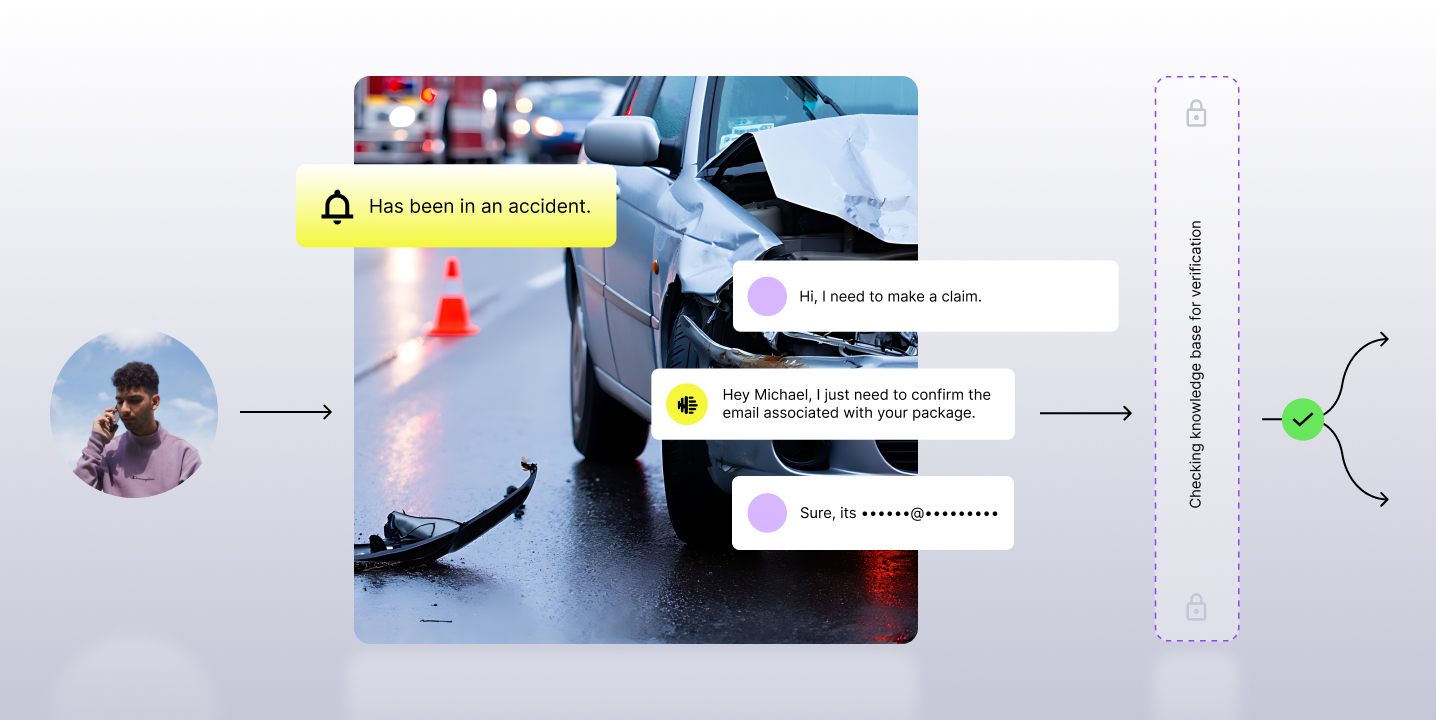
Protecting customer data is increasingly high on the list of top priorities for contact center leaders, yet 75% are still concerned about doing so while agents are working hybrid and remotely. From ensuring teams use call recording disclosures, to properly facilitating interactions that involve PII, such as payments, claims processing, warranties, and more, AI can play a key role in compliance.
At Root Insurance, one of the leading disruptors in the auto and rental insurance industries, Contact Center AI now ensures 100% of its interactions are monitored for compliance - up from less than 1%. Thanks to built-in QA evaluation forms and coaching workflows, Root Insurance has also improved adoption of its mandatory disclosures by 15%, which reduces the risk of getting dinged with multi-million dollar fines.
At another Fortune 500 national insurer, AI is even able to proactively signal when there are instances of potential fraud by noting that the same phone number, voice, and talk track are being used repeatedly. This helped the F500 brand recover hundreds of thousands of dollars for its telecommunications partner and shut down a 17-person fraud ring.
4. Automating QA evaluations so you can spend more time coaching
Group 1 Automotive, an F500 automotive car dealership and collision center, has always been a big believer in operating a robust and transparent quality assurance process. However, prior to using Contact Center AI Software, its process was painstakingly manual with quality analysts identifying interactions to evaluate and scoring them by hand using multiple tools and spreadsheets.
Now, AI helps automatically score parts of calls while providing a detailed tagged and time-stamped transcription to agents. AI assists agents in knowing why their performance was scored a particular way and reduced the number of agent disputes down from about six a month to zero -- a big win that ultimately saved supervisors hours of time each month that they could dedicate to coaching teams. At the same time, it enables agents to participate in self-coaching.
5. Accessing real-time agent and team performance data
Companies like Alcon Labs and Qualfon believe deeply in the power of coaching and enabling agents. Yet like most contact centers, it was difficult to know how agents were performing while working hybrid or remotely.
Now, AI helps quality analysts evaluate and score calls in minutes down from half an hour or more. At Qualfon, this increases the volume of feedback and high-quality, personalized coaching agents receive by 20% and helped contribute to a 16 second reduction in Average Handle Time (AHT).
With a little help from AI, supervisors are able to see detailed reports at the agent and team level. AI then auto-suggests who to coach on what topics and helps track which supervisors and programs drive a real impact on KPIS, such as revenue per call.

6. Flagging upsell and retention signals in real time with AI agents for contact centers
AI agents for contact centers don’t wait for a conversation to end before putting it to use. As a call or chat unfolds, agentic AI contact center technology can pick up on a customer mentioning a competitor, hesitating over price, or asking about an add-on, and flag that moment in real time across both voice and chat, whether the interaction is handled by a human agent or an AI agent.
This turns every interaction into a potential revenue or retention opportunity instead of a missed one. Supervisors and reps get a prompt to act, whether that means offering a relevant upgrade, addressing a churn risk before it escalates, or looping in a specialist, so growth teams no longer have to wait for a post-call report to know an opportunity existed.
A big opportunity
The combination of speech and text analytics alongside AI will be the driving force behind transformation contact center growth teams as we know them.
Continuing to get more automated, more accurate, and more efficient, and accelerating opportunities to better train and coach agents, will make a significant impact on customer satisfaction, compliance mitigation, agent effectiveness, and most importantly, the bottom line. At this point, it's only a matter of time.
Subscribe to our newsletter.
Frequently Answered Questions
AI agents for contact centers are agentic AI systems that support or handle voice and chat interactions, surface real-time insights during a conversation, and route coaching, compliance, and revenue signals to human teams. They work across every interaction rather than a sampled subset, which is what makes them useful for revenue growth.
AI agents for contact centers drive revenue growth by identifying upsell, retention, and conversion signals in real time, then routing that information to reps, supervisors, or automated workflows. Because they analyze all interactions instead of a sample, they catch opportunities that manual QA processes typically miss.
No. AI agents for contact centers are designed to work alongside human agents, handling repetitive interactions, surfacing coaching insights, and flagging opportunities in real time, while human agents focus on conversations that need judgment and relationship-building. The goal is to make every agent, human or AI, more effective at driving revenue.


.png)