Same Customer Question. Different Answer.
A customer asks about a fee in a branch and hears one explanation. They call later and receive another.
A tenured employee follows one escalation path for a fraud concern. Someone newer handles the same situation differently. A customer starts in chat, moves to the phone, and discovers that the frontline teammate has no record of what already happened.
Inside the bank, these may appear to be separate process failures. For the customer, the conclusion is clear: the bank cannot provide a consistent answer.
That is a serious problem for mid-sized and regional banks that compete on trust, familiarity, and service. Friendly employees cannot overcome a fragmented experience. If the answer changes by employee, channel, or location, customers begin to question which version they can trust.
Training alone cannot guarantee consistency
Banks commonly respond to service inconsistency with additional training, scripts, and documentation. Each is important, but each has limits.
Training happens before the customer interaction. Employees must remember the correct detail when the relevant situation occurs, sometimes weeks or months later.
Scripts work for predictable conversations but can become awkward when the customer’s circumstances do not follow the expected path.

Knowledge bases provide access to information, but the employee still needs to know what to search for, determine which document is current, and apply the guidance correctly while the customer waits.
This creates room for variation. Two capable employees can reach different conclusions because they interpret a policy differently, locate different information, or make different assumptions about the next step.
The problem is not necessarily poor employee performance. It may be an operating model that asks people to translate too much information from memory.
Consistency should not mean scripted conversations
Banking customers do not want every interaction to sound identical.
A customer questioning a fee needs a different conversation than someone reporting possible fraud or struggling with a payment. Frontline teammates need room to listen, explain, and respond to the customer naturally.
The bank should standardize the process, not the employee’s personality.
Consistency means customers receive the same essential answer, required disclosures, approved actions, and next step regardless of which qualified employee helps them. The language may change. The bank’s decision and process should not.
That distinction allows customer experience and compliance to support one another. The employee can communicate naturally while the bank maintains control over the actions and information that matter.
The goal is not robotic service. It is dependable service.
Put guidance inside the customer interaction
Real-time agent assist changes when and where the bank reinforces consistency.
Instead of relying entirely on what the employee remembers, the bank can provide relevant guidance while the conversation is happening.
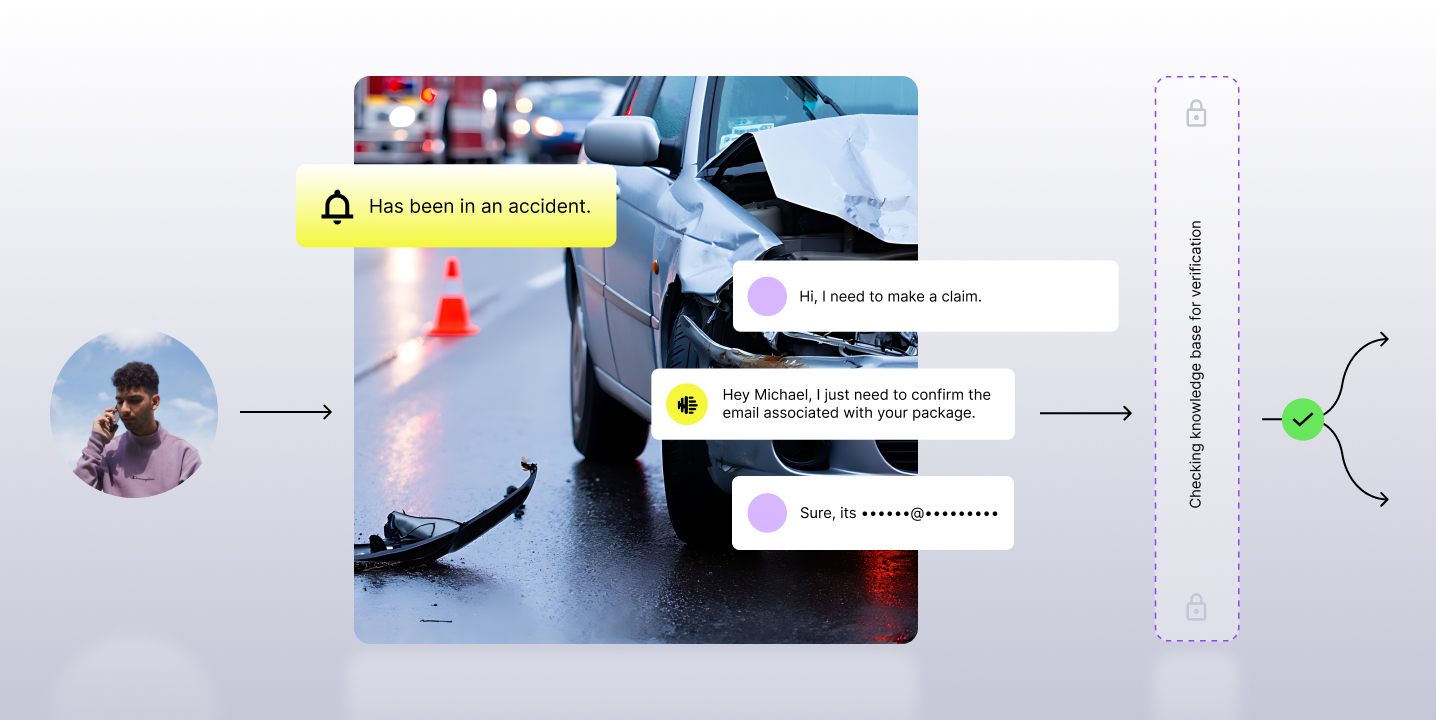
Observe.AI Companion Agent can surface approved policy information, required disclosures, process steps, reminders, and next-best actions based on the context of the interaction. The employee remains responsible for the customer and any decisions requiring human judgment.
For example, a fee question can trigger the current explanation and available resolution options. A fraud concern can bring forward the correct verification and escalation steps. A product eligibility question can surface applicable requirements without forcing the employee to search multiple documents.
This helps frontline teammates stay focused on the conversation while applying the bank’s current guidance more consistently.
It also reduces the behavioral differences employees develop when information is unclear. Some employees escalate immediately. Others improvise, rely heavily on scripts, place customers on hold, or ask a supervisor. Real-time support gives everyone a clearer foundation from which to handle the interaction.
Inconsistent answers create more work
When customers do not trust the first answer, they ask again.
They call back, contact another channel, visit a branch, request a supervisor, or submit a complaint. The original inconsistency creates additional customer effort and another unit of work for the bank.
This makes answer consistency more than a training or quality issue. It affects repeat contact, transfer volume, handle time, complaints, and customer confidence.
It can also make root-cause analysis difficult. A bank may see rising call volume around a fee or policy without realizing that customers are contacting the institution repeatedly because employees provide different explanations.
Conversation intelligence for banking can reveal these patterns by analyzing customer interactions across teams, channels, and locations.

Find where the bank’s answers begin to change
Observe.AI Interaction Intelligence can help leaders identify where customers receive conflicting explanations, where required behaviors are missed, and which topics generate repeat contact.
Banks can compare interactions by branch, service team, channel, tenure, or customer journey. They can examine whether one team follows a different escalation path, whether certain policies create confusion, or whether a recent process change is being applied consistently.
This provides a clearer view than training completion alone.
Knowing that every employee attended a policy session does not prove that the policy appears correctly in customer conversations. Leaders need to see whether the intended behavior occurred when it mattered.
Interaction Intelligence makes consistency measurable through actual customer interactions.
Start where inconsistency carries the most risk
Banks do not need to address every workflow at once.
Start with customer journeys where variation is both common and consequential. Fee explanations, fraud procedures, dispute handling, payment questions, product eligibility, account restrictions, and escalation paths are strong candidates.
Establish how employees handle those interactions today. Examine where answers, actions, transfers, and outcomes differ. Identify whether the source is unclear policy, outdated information, insufficient guidance, or a workflow that leaves too much room for interpretation.
Then introduce standardized real-time guidance and analyze the conversations again.
Did employees follow the correct process more consistently? Did holds and transfers decrease? Did fewer customers call back? Were disclosures completed? Did customers receive a clearer next step?
That creates a practical improvement loop. The bank identifies variation in real conversations, updates its guidance, supports employees during future interactions, and measures whether the experience changes.
Consistency is how service scales
Strong service cultures often depend on experienced employees sharing knowledge and modeling the right behaviors. That can work well when teams are small and tenured employees are readily available.
It becomes harder as the bank adds products, channels, locations, and new employees.
Culture does not scale perfectly. Tribal knowledge does not reach every interaction. Training cannot anticipate every moment in which an employee must interpret a policy or navigate an exception.
Banks need an operating layer that helps capable employees deliver the institution’s standard consistently.
Companion Agent makes approved guidance available during the interaction. Interaction Intelligence shows whether that guidance is producing the intended behavior and customer outcome. Together, they help the bank turn consistency from a training objective into a repeatable service capability.
Customers should not have to call twice to discover which answer is correct. They should not receive a different process because they chose another channel or reached a less-experienced employee.

The final test is simple: would the customer notice the improvement?
A meaningful change should reduce effort, increase confidence, and make the issue easier to resolve. That is how operational consistency becomes customer experience differentiation.
Make consistency the bank's competitive edge
Read more about the Service Leak in your banking operation.
Related reading
- Your Systems Know the Answer. Can Every Frontline Support Agent Find It?
- Your Best Customer Experience Can’t Depend on a Branch Visit
- The Quiet Switch: When Customers Stay but Their Money Moves
Subscribe to our newsletter.
Frequently Answered Questions