.png)
From VoiceAI to Companion Agents: What Working Close to the Customer Taught Me
When I joined Observe.AI, I expected a learning curve.
I knew I would need to understand the technology, the product, the customer environments, and the way AI systems behave inside real contact centers. What I did not fully appreciate was that the learning curve does not only belong to the people building the system.
It belongs to the customer, too.
Every deployment teaches both sides something. We learn how a customer’s business actually works beyond the process diagrams. Customers learn what it takes to prepare their workflows, policies, knowledge sources, and operational teams for AI. Somewhere in that shared learning curve is where the real product comes to life.
That has been the biggest lesson from my time as an AI Agent Engineer at Observe.AI.
Starting with VoiceAI
I started by working on VoiceAI, learning how spoken language gets processed, interpreted, and acted on in a live contact center environment. That gave me a strong foundation in the infrastructure behind AI agents: speech recognition, intent detection, orchestration, integrations, latency, fallback paths, and all the details that determine whether an AI system can handle a real conversation.
VoiceAI taught me that production AI is not about a model answering a prompt correctly in isolation. It is about whether the system can understand a customer, follow the correct workflow, use the appropriate business context, and take the correct action under real-world conditions.
That foundation became especially important when I moved into building Companion Agents.
Companion Agents are real-time AI systems that work alongside frontline teams during live customer conversations. Instead of replacing the person on the call, they help that person perform better in the moment. They listen, understand context, surface guidance, recommend next steps, and help the frontline teammate stay aligned to the right process.
That transition changed how I think about building AI.
Companion Agents Are Not Just Suggestions
From the outside, Companion Agents can sound simple.
An AI system listens to a call and surfaces helpful information. The frontline teammate gets guidance. The customer gets a better experience.
In production, it is much more complex.
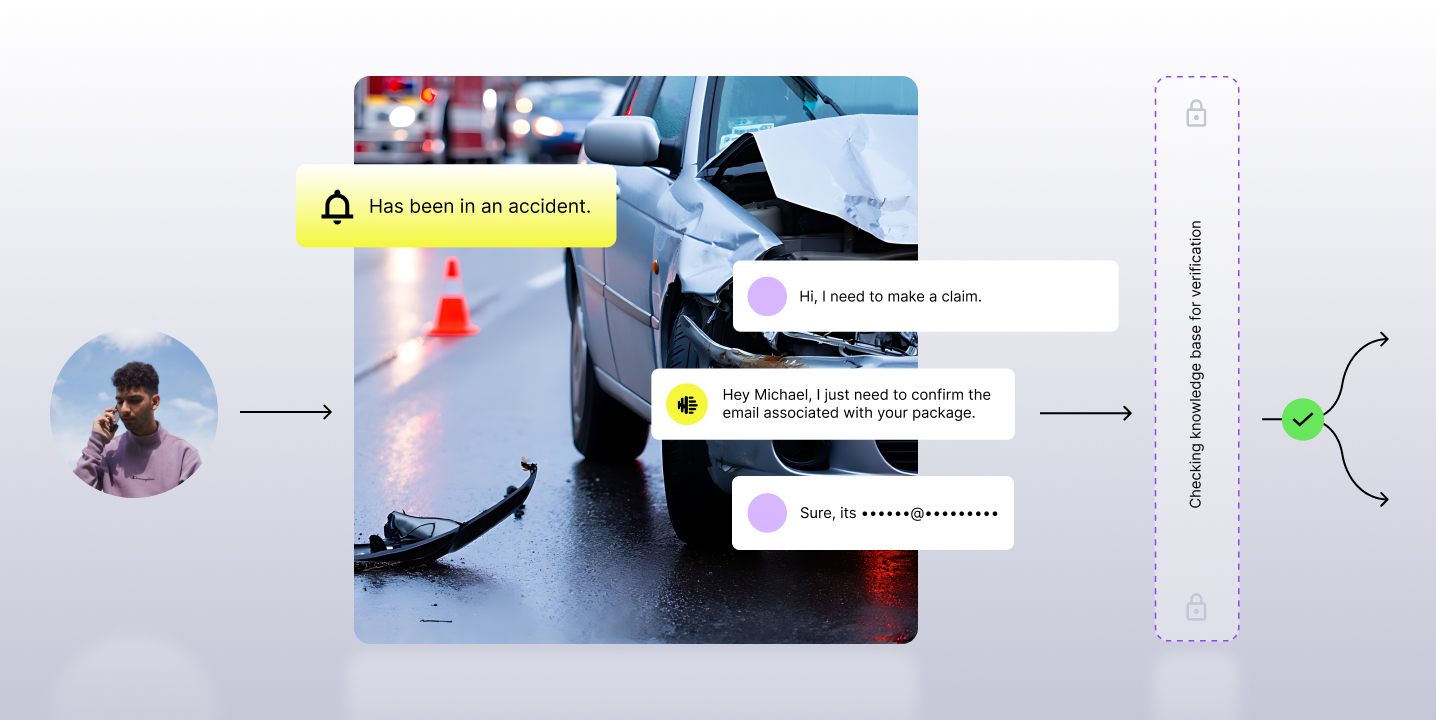
A live customer conversation does not follow a clean script. People interrupt each other. They change their mind. They skip steps. They provide incomplete information. They ask multiple questions at once. The frontline teammate may need to verify identity, navigate systems, follow compliance language, resolve the issue, and keep the conversation moving without making the customer wait.
A Companion Agent has to operate inside that reality.
It needs to maintain context as the conversation changes. It needs to know when to provide guidance and when to stay out of the way. It needs to be accurate enough to earn trust, fast enough to be useful, and grounded enough to reflect the customer’s actual policies and procedures.
The standard is not simply whether the AI produced a correct output.
The real standard is whether the frontline teammate on that call, with a customer waiting, was genuinely helped.
That is a very different bar.
What the Forward Deployed Model Changes
At Observe.AI, Companion Agent deployments are built through a Forward Deployed Team model. That typically includes an Engagement Manager, a Designer, and an AI Agent Engineer working closely with the customer from design through deployment and improvement.
The Engagement Manager brings the customer context: business goals, operational constraints, success criteria, and stakeholder alignment.
The Designer translates customer workflows into conversational logic, guidance, personas, escalation rules, and experience requirements.
The AI Agent Engineer turns those inputs into a working system that can operate reliably in production.
That structure matters because AI deployments are not just technical implementations. They are operational transformations.
Every customer has a different level of readiness. Some have clean, well-maintained policies and process documentation. Others have critical knowledge spread across PDFs, internal wikis, tribal knowledge, QA forms, spreadsheets, and “the way the best people do it.” Some workflows are documented clearly. Others only become clear when you watch real calls and see where frontline teams actually struggle.
That is where the Forward Deployed model becomes so valuable.
We are not building from a distance. We are close to the customer, close to the workflow, and close to the moments where the system either helps or does not. Feedback comes quickly from the people closest to the work. Gaps become visible. Assumptions get tested. The difference between “we shipped it” and “we know it is working” gets much smaller.
The Customer Has a Learning Curve, Too
One of the most important things I have learned is that AI readiness is not only about the AI vendor.
Customers also go through a learning curve.
To make AI work well, they often need to clarify the policies they want the system to follow. They need to decide which workflows are standard, which exceptions matter, and where human judgment should remain in control. They need to define what “good” looks like, not just at a high level, but in the details of each interaction.
That work is not always easy.
AI exposes ambiguity. If a policy is unclear, the system will force the question. If a workflow has five versions depending on who you ask, the deployment process will surface it. If success criteria are vague, testing and evaluation will make that obvious.
That can feel challenging, but it is also where a lot of progress happens.
The process of building a Companion Agent often helps customers get sharper about their own operations. They identify process gaps. They clean up outdated documentation. They align teams around the right language, rules, and outcomes. They start to understand that AI is not just something you turn on. It is something you build into the way the business operates.
Building for Customers with Real Stakes
Working with large enterprise customers raises the bar.
The workflows are more complex. The customer data is more sensitive. The cost of a bad answer is higher. The tolerance for edge cases is lower.
In these environments, “mostly right” is not good enough. A Companion Agent needs to be reliable in the moments that matter most. It needs to support frontline teams without distracting them. It needs to reflect the customer’s policies accurately. It needs to keep improving as the customer’s business changes.
That means the work is never truly finished at launch.
Live usage reveals new patterns. Edge cases surface. Policies change. Teams adjust. Customers learn what they want the AI to do more of, less of, or differently. The system has to evolve with that feedback.
That is one of the reasons this work is so interesting. It sits at the intersection of technical depth, customer empathy, and operational detail. You cannot build a strong Companion Agent by only understanding models. You also have to understand how people work.
What Banking Has Taught Me About Scale
Today, I am working more deeply in the banking vertical, and it has made these lessons even clearer.
Banking contact centers are highly sensitive to regulatory requirements, customer trust, and operational complexity. Frontline teams are often handling issues that are urgent, emotional, or financially important to the customer. The Companion Agent supporting those teams needs to be precise, fast, and trustworthy.
Scale changes the nature of the problem.
At lower volumes, some edge cases appear occasionally. At the banking scale, they appear constantly. Small workflow gaps become visible quickly. Minor ambiguity in a policy can create repeated friction. A rare failure mode can become a common operational issue when the call volume is high enough.
Solving those problems requires more than technical debugging.
You have to understand the workflow behind the failure. You have to know what the frontline teammate was trying to do, what the customer needed, which policy applied, what data was available, and why the system behaved as it did.
It is demanding work. It is also clarifying. Scale has a way of showing you what matters.
The Learning Curve Is the Work
The biggest lesson I have taken from this role is that building AI for contact centers is not a one-time implementation. It is a shared learning process.
We learn the customer’s business. The customer learns what it takes to make AI effective in their environment. Together, we refine the workflows, the system behavior, the policies, the evaluation process, and the operating model around it.
That is the work.
The problem statement keeps moving because customer needs keep moving. Workflows change. New edge cases appear. Business priorities shift. The system has to adapt.
That is why working close to the customer matters so much. You cannot fully understand these problems from a distance. You have to see how the system behaves in production. You have to hear the feedback. You have to understand the human context behind the technical issue.
That is where I have learned the most.
And it is where the best AI systems get built.
Subscribe to our newsletter.
Frequently Answered Questions



.png)
.png)
.png)