Your Practices Are Open 40 Hours a Week. Your Patients Aren’t.
Most healthcare practices are organized around operating hours. Patients are not.
A patient remembers to schedule an appointment after dinner. A parent realizes at 6:30 a.m. that a visit needs to be moved. Someone receives a referral during the workday but cannot wait on hold while they are at work. Another patient sees a billing charge on Saturday and wants to understand it before the next statement arrives.

None of these patients are being unreasonable. They are trying to manage their healthcare around jobs, families, transportation, and everything else competing for their attention.
For years, practices have addressed this mismatch with voicemail, patient portals, online forms, and instructions to call back during business hours. These options allow patients to initiate contact, but they often do not let them complete the task.
A patient can leave a message or submit a request. Someone still has to review it, call the patient back, gather the same information again, and complete the work later.
The next step in patient access is not simply giving patients more ways to contact the practice. It is helping them accomplish something when they do.
After-hours patient access is part of the patient experience
Healthcare organizations invest heavily in the experience patients receive during care. They recruit skilled providers, improve facilities, reduce in-office wait times, and train staff to communicate clearly.
But the patient experience begins before the visit and continues after it.
If scheduling requires several calls, a cancellation cannot be completed after hours, or a routine question becomes a next-day callback, the practice transfers its operating constraints to the patient.
That friction becomes more noticeable as patients gain more choices. They can compare providers, read reviews, and complete many other important tasks online at any hour. Calling repeatedly during business hours can make even a respected healthcare organization feel difficult to access.
Extending access does not necessarily require a concierge operation or another overnight shift. Sometimes it means giving patients a reliable way to complete routine tasks when they are ready to act.
How does voice AI help hospital patient access teams?
Voice AI for hospital contact centers and healthcare practices can provide conversational access without requiring staff to answer every call around the clock.
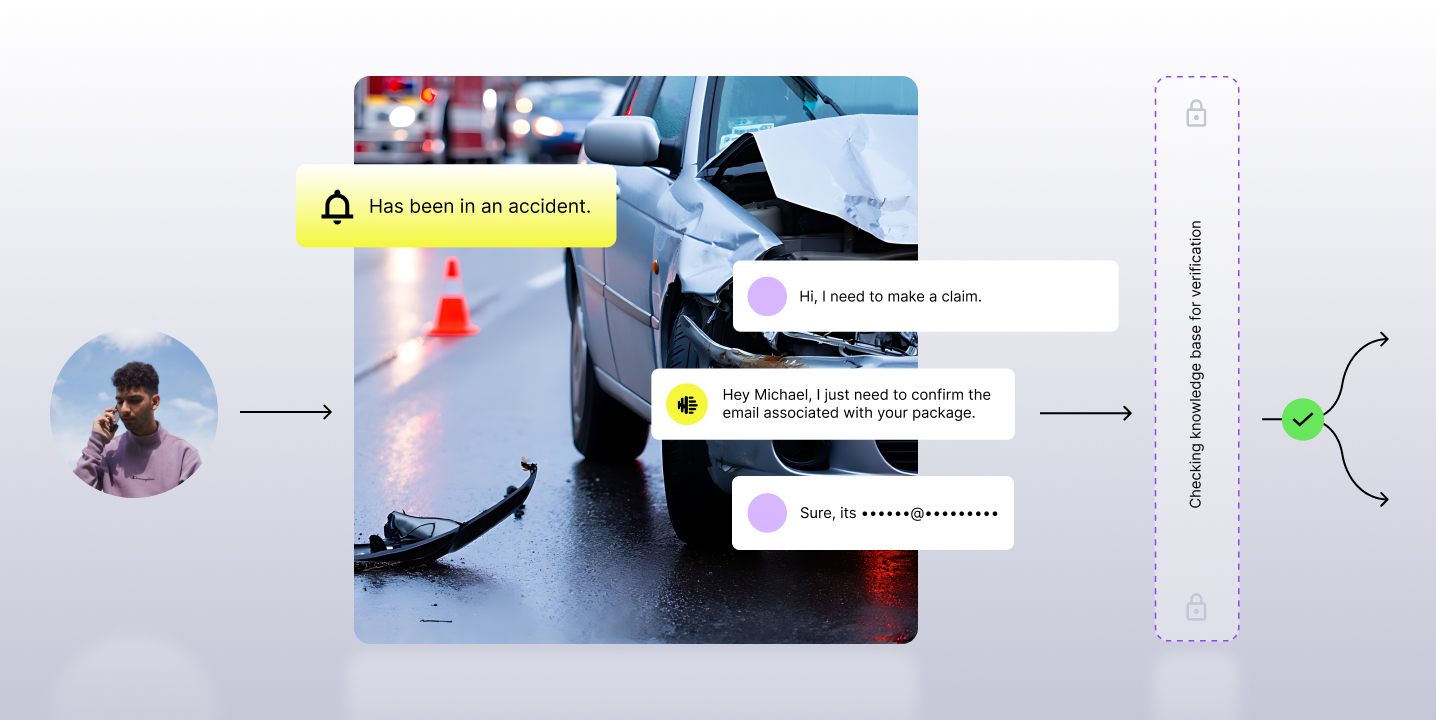
An AI voice agent can answer after the front desk closes, determine why the patient is calling, and complete workflows that the organization has approved. Depending on the workflow and available integrations, it can schedule or reschedule an appointment, process a cancellation, confirm office information, answer common questions, or collect information for follow-up.
Chat AI can support similar tasks through a website, messaging channel, or another digital entry point.
The value comes from helping the patient reach an outcome. Traditional voicemail captures a message. A static web form captures data. Conversational AI can ask clarifying questions, apply scheduling rules, and complete an appropriate next step.

If the request is outside the AI agent’s approved scope, the system can document the patient’s need and route it to the correct team. It should not pretend that every request can be automated.
The goal is useful availability. Patients should be able to complete common tasks at any hour while still having a clear path to a person when the situation requires one.
What are the use cases for AI voice agents in healthcare?
AI voice agents are best suited for common patient requests that follow defined rules and do not require clinical judgment.
Patient scheduling is one of the most practical starting points. A patient can describe the type of care they need, answer relevant questions, hear approved appointment options, and confirm a time without waiting for the office to open.
Rescheduling and cancellation are also valuable after-hours workflows. Giving patients an easy way to change an appointment can reduce no-shows and return canceled slots to the schedule sooner. The earlier a practice learns that a patient cannot attend, the more time it has to offer that appointment to someone else.
Other use cases include appointment confirmation, office hours, directions, provider or location searches, routine preparation instructions, referral intake, and basic billing support.
Conversational AI for specialty clinics can be especially useful when patients are unsure which provider, location, or appointment type they need. Instead of navigating a rigid phone tree or guessing which form to submit, the patient can begin by explaining the problem.
The system can then apply the organization’s rules behind the scenes.
Patients should not need to understand your organization
Healthcare access processes often assume that patients know how the organization is structured.

Which location should they call? Does the scheduling team or referral team handle the request? Do they need a new-patient appointment, a follow-up visit, or a specific procedure type? Which provider treats the condition? Should the question go to billing, registration, or insurance verification?
Patients rarely think in those terms. They think, “My knee hurts,” “I need to move my appointment,” “I received a bill I do not understand,” or “My doctor told me to schedule a test.”
A conversational interface allows the patient to begin with what they need rather than with the department responsible for delivering it. The technology can ask relevant questions, determine the appropriate workflow, and direct the patient to the right next step.
This matters after hours, but it also improves access throughout the day. Patients should not have to decode the organization before they can receive help.
How can hospitals reduce call center wait times with AI?
After-hours automation can reduce pressure on daytime patient access teams.
Every appointment scheduled overnight is one less call entering the morning queue. Every cancellation completed automatically is one less voicemail to return. Every routine question answered is one less interruption for the front desk.
That creates more room for interactions that require people. Staff can spend more time helping patients with complex scheduling needs, referral issues, sensitive billing questions, or situations that require empathy and judgment.
Healthcare call center automation can also respond during peak periods, when unexpected demand pushes hold times higher. Rather than forcing every caller into the same queue, an AI voice agent can handle approved requests immediately and transfer more complex needs with the relevant context.
Reducing hold times in hospital call centers with AI should not mean blocking access to staff. It should mean removing routine work from the queue so patients who need a person can reach one sooner.
The impact should be measured through completed patient tasks, successful scheduling outcomes, reduced voicemail volume, shorter wait times, and fewer repeat contacts. Call containment alone does not show whether the experience actually worked.
Design patient access around the moment of intent
Healthcare leaders often discuss access in terms of channels: phone, website, patient portal, text, or chat. A more useful starting point is the patient’s moment of intent.
When a patient decides to act, how much work does the organization require from them?
Can they complete the task immediately? Do they have to remember to call tomorrow? Will they need to repeat information because an online request becomes a phone conversation? Can they explain what they need in their own words, or must they navigate menus and choose from categories they may not understand?
Every additional step creates another opportunity for the patient to stop, forget, or seek care elsewhere.
AI voice agents for patient scheduling and Chat AI can shorten the distance between intent and action. They allow patients to begin the process when the need is top of mind and complete routine tasks without rearranging their day around office hours.
Extended access can improve practice operations
The benefits of 24/7 patient self-service extend beyond convenience.
Capturing after-hours conversations gives practice leaders a clearer view of when patients seek help and what they are trying to accomplish. That information can reveal demand that was previously hidden in abandoned calls, incomplete forms, and unreturned voicemail.
Leaders can see which appointment types patients request after hours, which questions recur, and which issues still require staff intervention. They can use those findings to improve scheduling rules, patient communications, online content, staffing decisions, and automated workflows.
Extended access can also reduce the administrative backlog that accumulates while the office is closed. Staff begin the day with fewer routine messages to process and more complete context for the requests that still need attention.
Meet patients when they are ready to act
A healthcare practice does not need to promise that every issue will be resolved at every hour.
Clinical questions, complicated billing disputes, scheduling exceptions, and sensitive situations will continue to require people. Good automation recognizes those boundaries and makes the handoff clear.

But routine patient needs do not have to wait for the office lights to turn on.
Voice AI and Chat AI can give patients a reliable front door that remains available after hours, completes the tasks it is trusted to handle, and prepares the next human interaction when automation is not appropriate.
Your practice may operate 40 hours a week. Your patients manage their health all 168.
Better access starts by meeting them at the moment they are ready to do something about it.
Subscribe to our newsletter.
Frequently Answered Questions