Empty appointment slots are a workflow problem
Most healthcare practices have a cancellation policy. Far fewer have a reliable way to recover the capacity that cancellations create.
A policy tells patients how much notice they should provide and what may happen if they cancel late or miss an appointment. A capacity strategy determines what the practice does next.
That distinction matters because an open appointment is perishable. Once the scheduled time passes, it cannot be carried into the following week. The provider was available. The room was reserved. Staff time was allocated. The opportunity to deliver care and generate revenue existed. Then the slot went unused.
Cancellation fees, reminders, and notice requirements may influence patient behavior, but they do not refill the schedule. The operational question is whether the practice can detect newly available capacity and quickly match it with another patient who needs care.
Empty appointment slots are a workflow problem
Consider what happens when a patient calls to cancel an appointment.
A staff member answers the phone, finds the patient’s record, removes the appointment, and looks for someone who may be waiting for that provider or service. The employee then calls one or more patients, waits for responses, and updates the schedule if someone accepts.
Every step makes sense. The problem is the time required to complete them.
If the patient leaves a voicemail, cancels after hours, or cannot get through because of a long hold time, the process may not begin until the next business day. For an appointment scheduled the following morning, that delay can make the opening nearly impossible to refill.
The cancellation is recorded, but the capacity is lost.
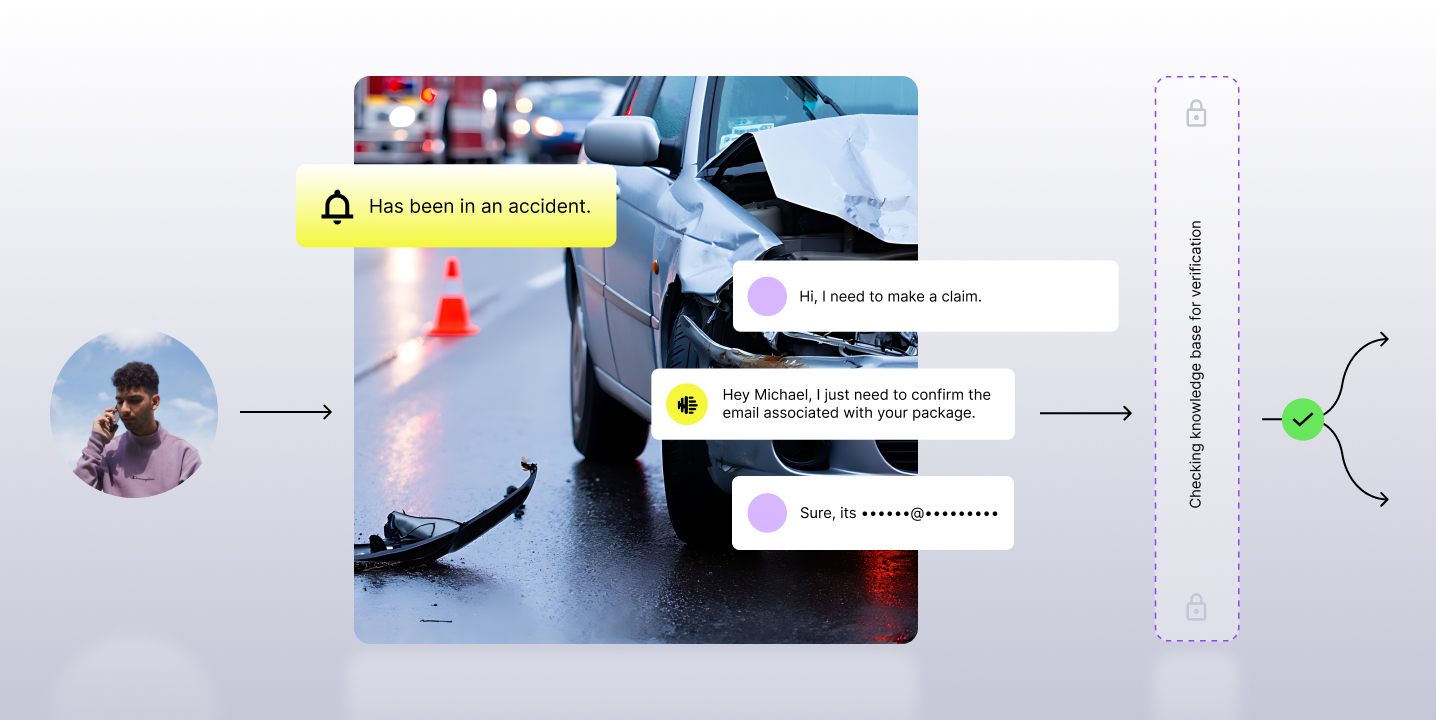
Patient scheduling automation changes that sequence. A patient can cancel or reschedule through voice or chat at any time. The system can confirm the change, update the approved scheduling workflow, identify eligible patients, begin outreach, and schedule someone who accepts the opening.
Instead of simply documenting the cancellation, the practice begins recovering the capacity immediately.
How can AI voice agents help reduce appointment cancellations?
AI voice agents for patient scheduling give patients a faster, easier way to change appointments before they become no-shows.
A patient may receive a reminder and realize that the appointment no longer works. With a traditional process, they must call during business hours, wait for a scheduler, explain the situation, and find another time. If they are busy or the queue is long, they may decide to call back later and never do it.
An AI voice agent can answer immediately, identify the existing appointment, offer approved alternatives, confirm the new time, and release the original slot. The patient keeps the appointment at a time that works, while the practice gets an earlier opportunity to fill the opening.
The same workflow can operate outside regular business hours. A patient who remembers at 9 p.m. does not need to wait until the following morning. They can make the change while they are ready to act.

This is one practical use of voice AI for hospital contact centers, specialty clinics, and other healthcare organizations managing high scheduling volume. The technology does not eliminate schedule changes. It gives patients a simple way to communicate those changes before capacity is lost.
Make rescheduling easier than disappearing
No-show reduction efforts often focus on reminders and enforcement. Both have a role, but they address only part of the problem.
Patients miss appointments for ordinary reasons. Work schedules change. Transportation falls through. A child becomes sick. A patient forgets the appointment until the reminder arrives. Sometimes the original appointment was scheduled months earlier and no longer fits the patient’s needs.
The patient may fully intend to notify the practice. But if rescheduling requires a long phone call during limited hours, good intentions can turn into an empty slot.
Conversational AI for specialty clinics and larger health systems can make changing an appointment as simple as explaining the situation in plain language. The system can identify the patient’s request, follow the appropriate workflow, offer suitable alternatives, and confirm the change.
Making rescheduling easier benefits both sides. The patient avoids a missed appointment or cancellation fee. The practice retains the patient while returning the original appointment to available inventory sooner.
Treat every opening as valuable inventory
Healthcare organizations already manage exam rooms, equipment, supplies, and staff coverage as limited resources. Provider time deserves the same level of attention.
A late opening for a high-demand specialist, diagnostic test, therapy session, or procedure can have significant clinical and financial value. Yet many practices still depend on spreadsheets, voicemail, or individual staff members to refill that time.
This creates a gap between scheduled capacity and utilized capacity.
A true capacity strategy considers how quickly the practice learns that an appointment is available, whether patients can make changes without waiting on hold, and how efficiently the organization can identify someone who is both eligible and ready to accept the opening.
It also considers the rules behind the appointment. Not every patient can fill every slot. The replacement may need a certain referral status, visit type, provider relationship, location, or preparation window. Effective patient scheduling automation must work within those rules rather than simply offering the opening to the first available person.
The objective is not to fill the calendar at any cost. It is to connect appropriate patients with suitable openings while there is still time to act.
How does voice AI help hospital patient access teams?
Voice AI can remove routine scheduling work from already busy patient access teams.
AI voice agents can handle common requests such as confirming appointments, canceling visits, finding alternative times, and answering standard location or preparation questions. When a request is outside the approved workflow, the AI voice agent can transfer the patient or create an appropriate follow-up task.
This reduces the number of repetitive calls that staff must process manually. It can also help patients avoid hold times when they only need to make a straightforward schedule change.
The result is not simply lower call volume. Patient access employees gain more time for requests that require judgment, coordination, or empathy. Patients with complex needs can reach a person sooner because routine work is no longer occupying as much of the queue.
Healthcare call center automation should therefore be measured by more than call containment. Leaders should examine whether it helps patients complete important tasks, prevents avoidable no-shows, recovers canceled appointments, and improves access to staff when human support is necessary.
Use conversation data to understand why patients cancel
Scheduling automation can help recover an opening after a patient cancels. Interaction Intelligence can help the organization understand why the cancellation happened.

The explanation is often buried in the conversation.
A patient may say the appointment was too far away, the location was inconvenient, the preparation requirements were unclear, or their coverage questions were never resolved. They may have been unable to reach the practice to make an earlier change. They may also have found another provider who could see them sooner.
A cancellation code in the scheduling system rarely captures that level of detail.
Interaction Intelligence can analyze patient conversations at scale and identify recurring reasons behind cancellations, repeat calls, transfers, and scheduling failures. Leaders can then separate unavoidable schedule changes from process problems that the organization can address.
For example, repeated questions about preparation instructions may indicate that reminder communications need to change. Cancellations tied to location confusion may point to an issue with scheduling guidance. Patients who repeatedly mention long waits may reveal a need for better self-service or additional automation.
The conversation explains the outcome. Without that context, practices may know how many cancellations occurred but not what they can do differently.
Measure capacity recovery, not only patient compliance
Cancellation and no-show rates remain useful, but they do not show whether the practice successfully recovered the lost capacity.
A stronger measurement approach looks at the percentage of canceled appointments that are refilled, how long it takes to refill them, and how often patients successfully reschedule without staff assistance. It also examines which providers, locations, appointment types, and times of day experience the greatest capacity loss.
These measures provide a clearer view of scheduling performance. They show whether the organization is converting available demand into completed appointments instead of simply documenting why patients failed to arrive.
They can also reveal where healthcare call center automation is producing value. If automated rescheduling gives the practice more time to refill openings, increases completed schedule changes, or reduces repetitive calls to patient access teams, that improvement should be visible in the operating data.
A cancellation should start a recovery workflow
Healthcare organizations will always experience cancellations. Patients’ circumstances change, and no policy will eliminate every missed or moved appointment.
The goal should not be to make schedule changes difficult or punitive. It should be to make the change easy for the patient and the recovery process fast for the practice.
AI voice agents, Chat AI, scheduling automation, and Interaction Intelligence can support that goal in different ways. They can help patients act sooner, return canceled appointments to inventory, connect openings with other patients, and show leaders why capacity is being lost.
A cancellation policy defines what patients are expected to do. A capacity strategy ensures the practice is prepared for what happens next.
Subscribe to our newsletter.
Frequently Answered Questions