What Policyholder Conversations Reveal About Insurance Business Performance
Insurance organizations have access to enormous amounts of operational data.
Claims systems track processing times and payments. Policy administration platforms capture coverage changes and renewals. Contact center dashboards measure call volumes, service levels, and handling times.
These systems provide essential information about business performance.
But there is another source of intelligence that insurers have historically struggled to use at scale: the conversations they have with policyholders.
Every day, customers explain why they are calling, what they do not understand, what concerns them, and where their experience could improve.
Advances in AI make it possible to examine these conversations as a source of business intelligence, not simply as records of customer service activity.
Understanding the Reasons Behind the Numbers
Operational dashboards can tell an insurer that claim-related call volumes are increasing.
They may not explain why.
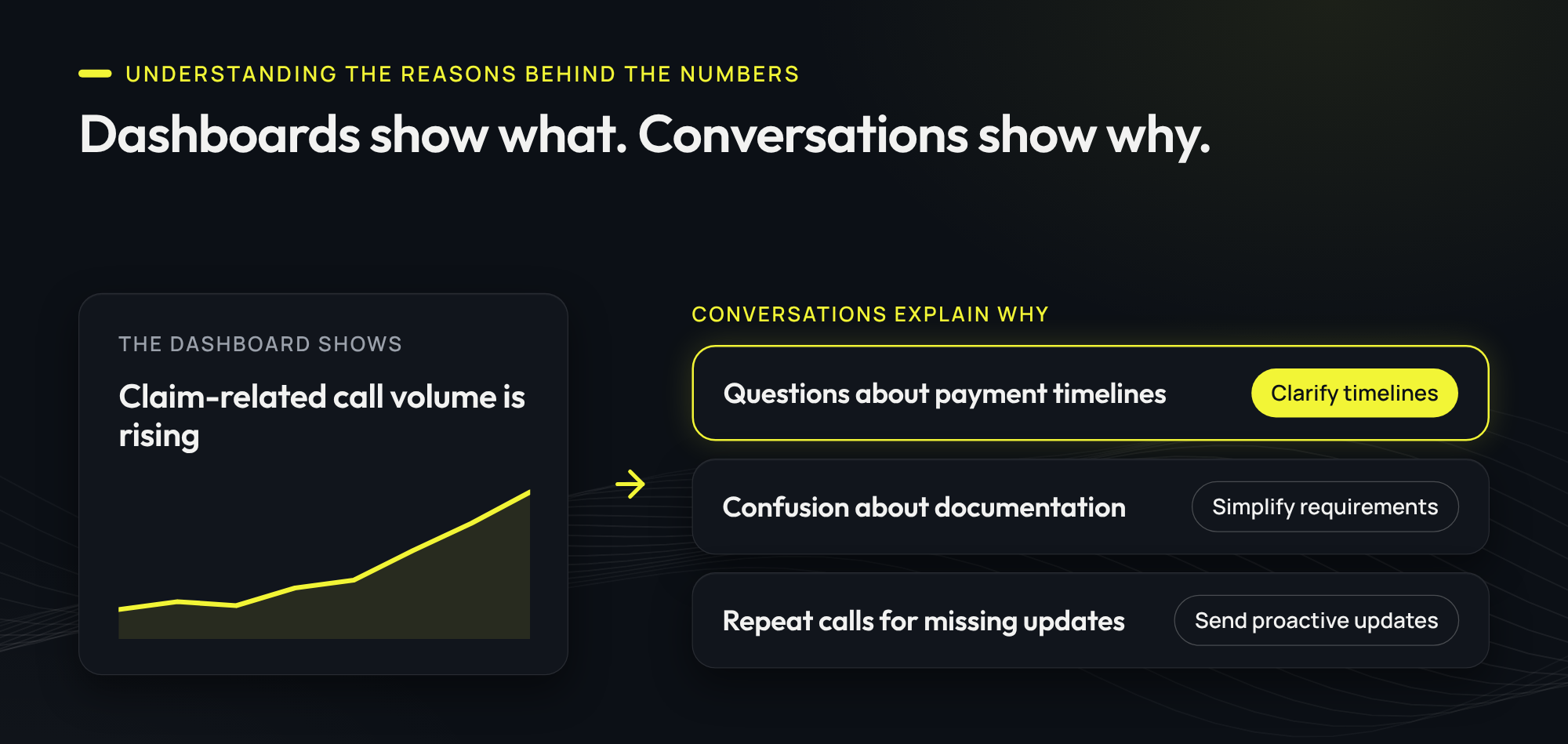
Are customers asking about payment timelines? Are they confused about documentation requirements? Are they contacting the insurer repeatedly because expected updates have not arrived?
Similarly, a spike in renewal-related inquiries might reflect premium concerns, confusion about coverage changes, or questions about available options.
These distinctions matter because each requires a different operational response.
Conversation intelligence helps organizations move beyond measuring what happened and toward understanding why it happened.
Finding Patterns Across the Policyholder Lifecycle
Consider an insurer introducing a revised homeowners policy.
Within weeks, its contact centers begin receiving questions about specific coverage provisions.
Individual representatives can answer those questions, but the larger business may not immediately recognize the emerging pattern.
With AI-powered analysis, insurers can examine interactions across teams and identify recurring topics, changes in customer sentiment, and patterns of escalation.
Those findings can help product, underwriting, communications, and operations teams determine whether additional clarification is needed.
The same approach can apply to claims documentation, billing changes, digital servicing difficulties, and renewal communications.
The value extends beyond improving contact center performance.
It helps insurers understand how customers experience their products and processes.
Moving From Reactive Reporting to Proactive Intelligence
Traditional analytics often begin with a question.
An operations leader notices an increase in handling time and asks an analyst to investigate. A claims executive sees an escalation trend and requests a report.
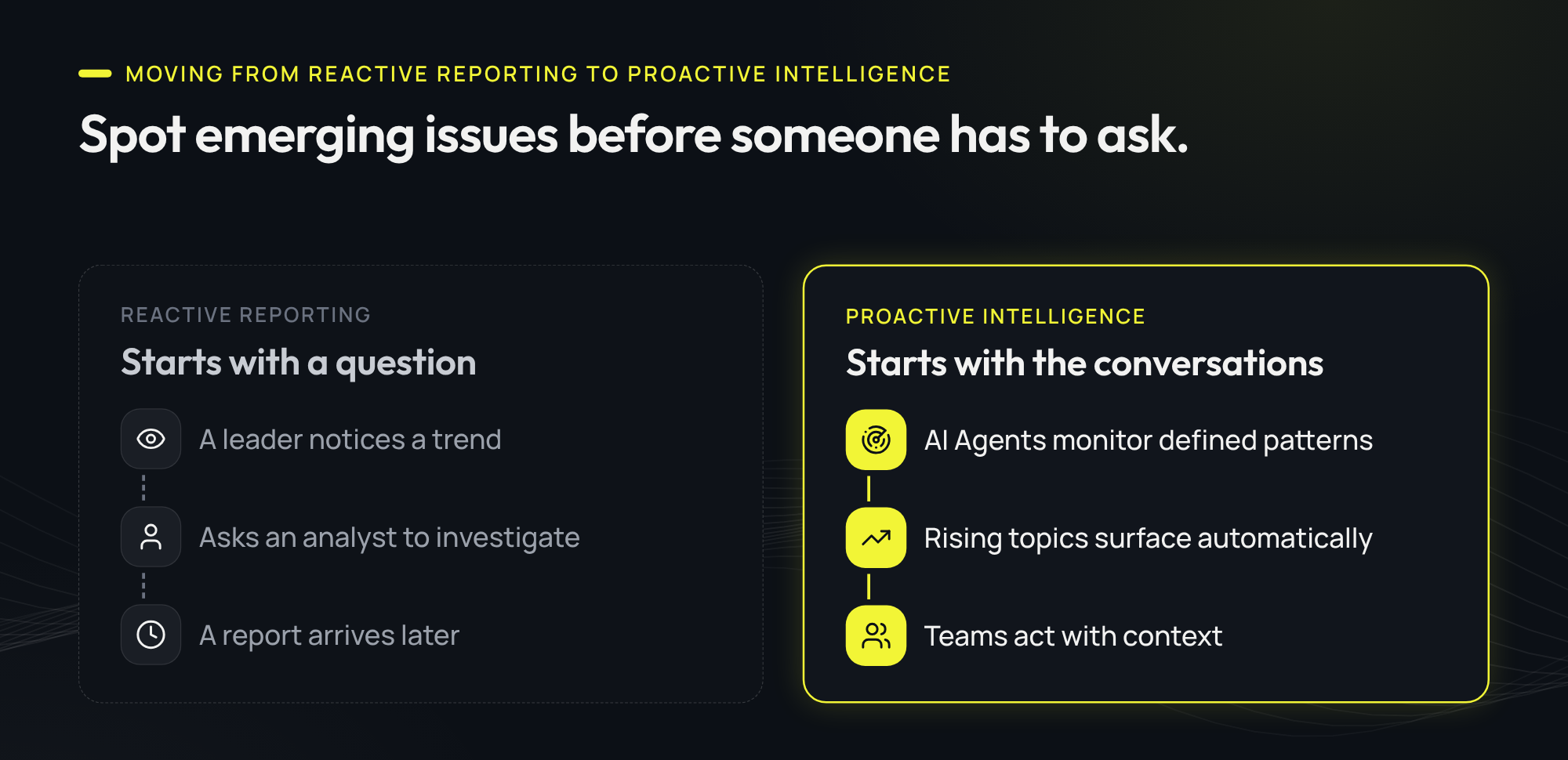
AI introduces an opportunity to complement that process with ongoing analysis.
Rather than waiting for someone to identify a problem, AI Agents can monitor defined patterns, surface changes, and help teams investigate potential issues.
Imagine an insurer experiencing a sudden increase in weather-related claim inquiries.
An Insights Agent could help identify rising topics and questions in conversations, giving operations leaders additional context for staffing, communications, and service decisions.
The objective is not to replace existing business intelligence systems. It is to add the voice of the policyholder to the information used for decision-making.
Connecting Insights to Business Outcomes
Conversation intelligence becomes most valuable when it informs action.
A recurring coverage question may lead to clearer documentation. A surge in billing complaints may prompt a review of a recent communication. A pattern of repeat claim inquiries may encourage more proactive status updates.
These actions should also be measurable.
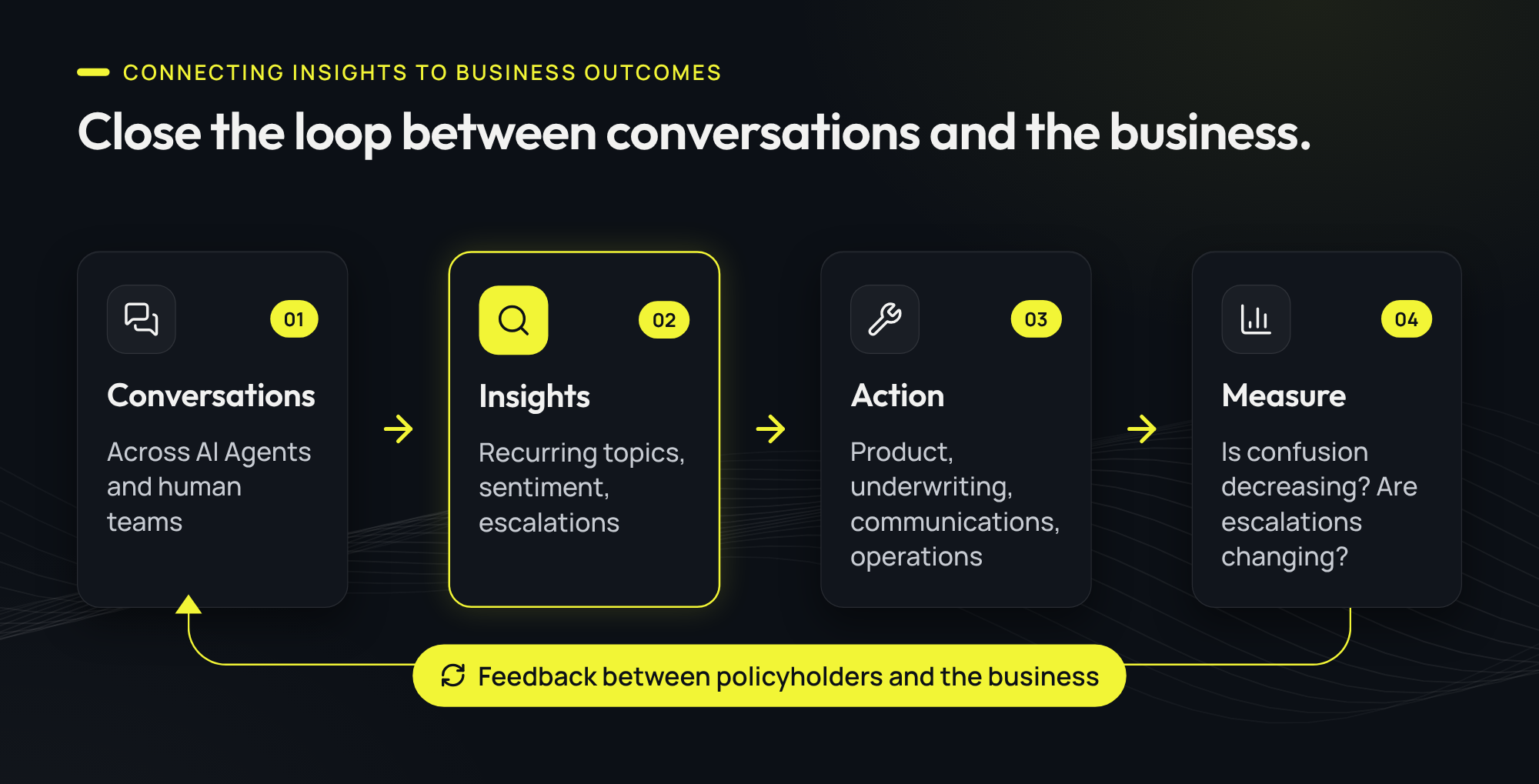
By examining subsequent conversations, insurers can assess whether customer confusion decreases, interactions become easier to resolve, or escalation patterns change.
This creates a feedback mechanism between policyholder experiences and business operations.
Turning Conversations Into an Enterprise Asset
Observe.AI Insights Agents and Interaction Intelligence help organizations analyze customer conversations, investigate emerging issues, and identify opportunities for improvement.
Because intelligence can span AI Agent and human interactions, insurers can develop a more comprehensive understanding of the customer journey.
For insurance leaders, the opportunity goes well beyond contact center analytics.
Every policyholder conversation contains information about how the business is performing. AI makes it possible to put more of that information to work.
Subscribe to our newsletter.
Frequently Answered Questions