Why Traditional Agent Training Falls Short in Modern Insurance Operations
Insurance representatives are expected to navigate a complex combination of product knowledge, regulations, internal systems, and customer expectations.
Whether supporting policy servicing, claims, billing, or new business inquiries, employees must translate detailed insurance information into clear and accurate guidance.
Traditional training programs provide an important foundation for this work. But as products, procedures, and customer expectations change, insurers have an opportunity to extend learning beyond initial onboarding and periodic coaching sessions.
AI makes it possible to connect employee development more closely to the conversations happening every day.
The Challenge of Insurance Knowledge
Insurance operations are particularly knowledge-intensive.
Representatives may support multiple products, policy types, and jurisdictions. They need to understand coverage terminology, exclusions, servicing procedures, escalation requirements, and the limits of their authority.
Even experienced employees encounter situations they have not handled before.
A representative may be highly effective at billing inquiries but less familiar with a complex endorsement. A newly hired employee may understand policy documentation but need more practice handling emotionally difficult claims conversations.
Yet traditional training programs frequently organize learning around standardized modules or scheduled sessions.
These approaches are useful for establishing consistent knowledge, but they are not always sufficient for addressing individual development needs.
From Standardized Training to Personalized Development
Imagine two insurance service representatives who receive similar quality scores.
One consistently follows procedures but struggles to explain complex coverage terms in plain language. The other communicates clearly but occasionally misses important verification steps.
Giving both representatives the same training module may not address either issue effectively.
With AI-powered interaction analysis, insurers can identify more specific performance patterns across conversations.
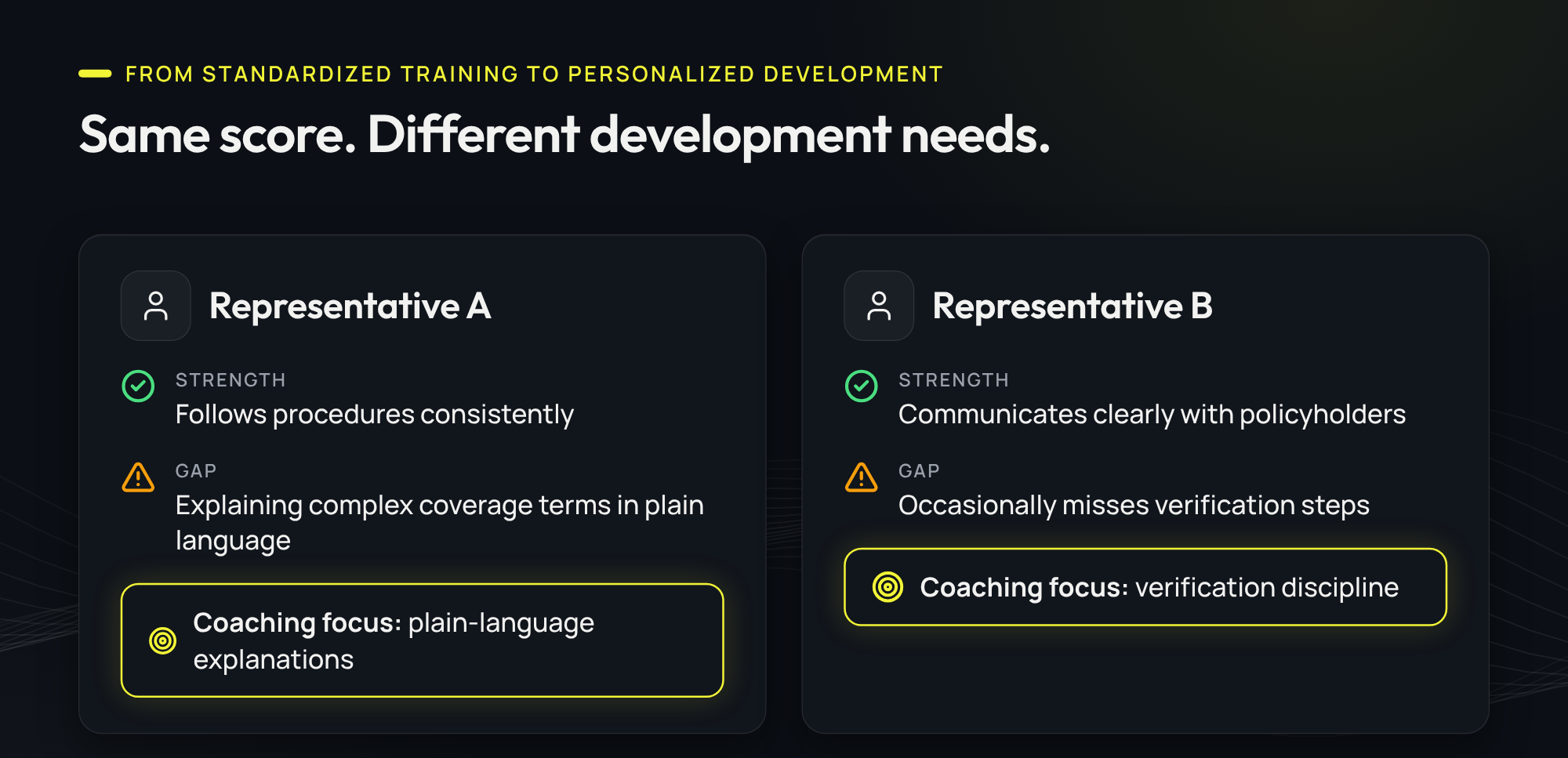
That information can help managers develop coaching plans focused on the skills each representative needs to strengthen.
Rather than relying solely on selected calls or supervisor observations, coaching can draw from a broader record of employee interactions.
Bringing Guidance Into the Conversation
Coaching is valuable, but the time between a coaching session and the next relevant customer interaction can be substantial.
Real-time AI assistance helps close that gap.
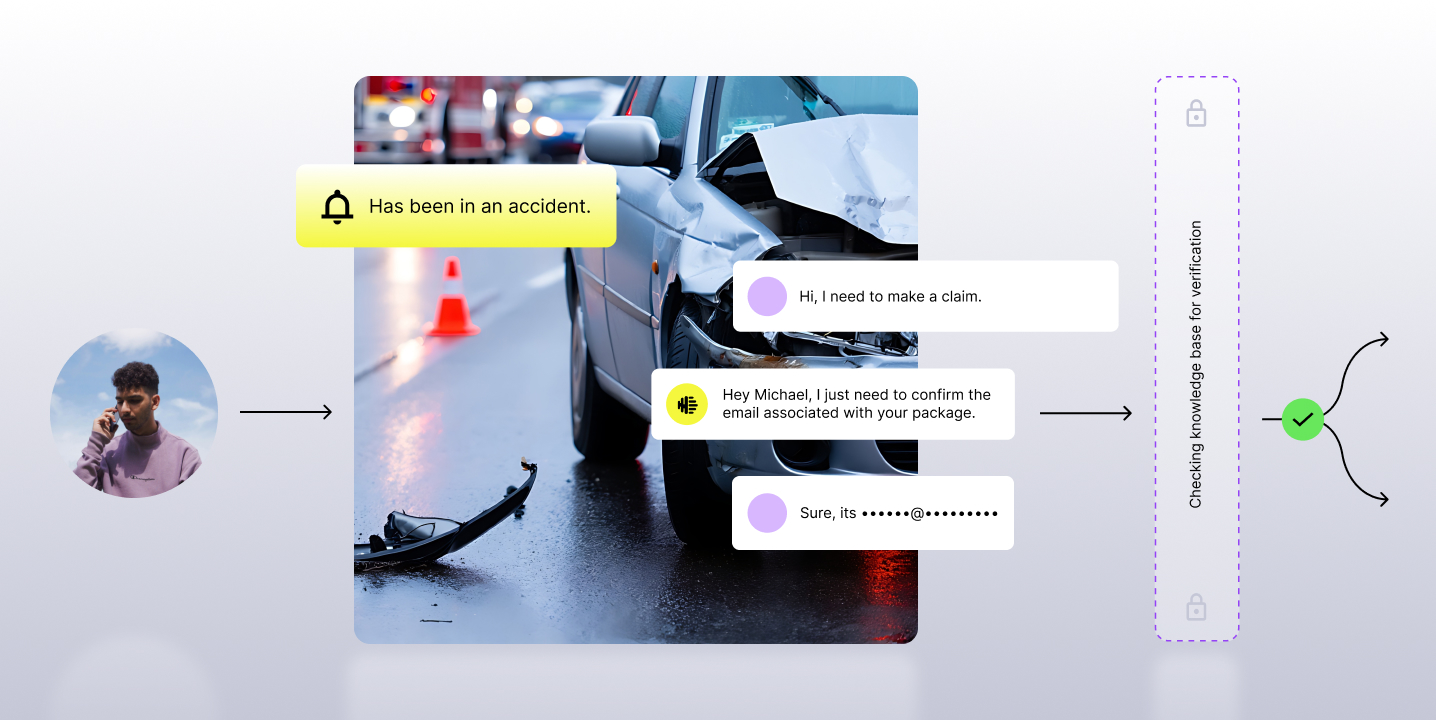
During a conversation, an AI companion can surface approved information, remind representatives of relevant procedures, and help them navigate complex workflows.
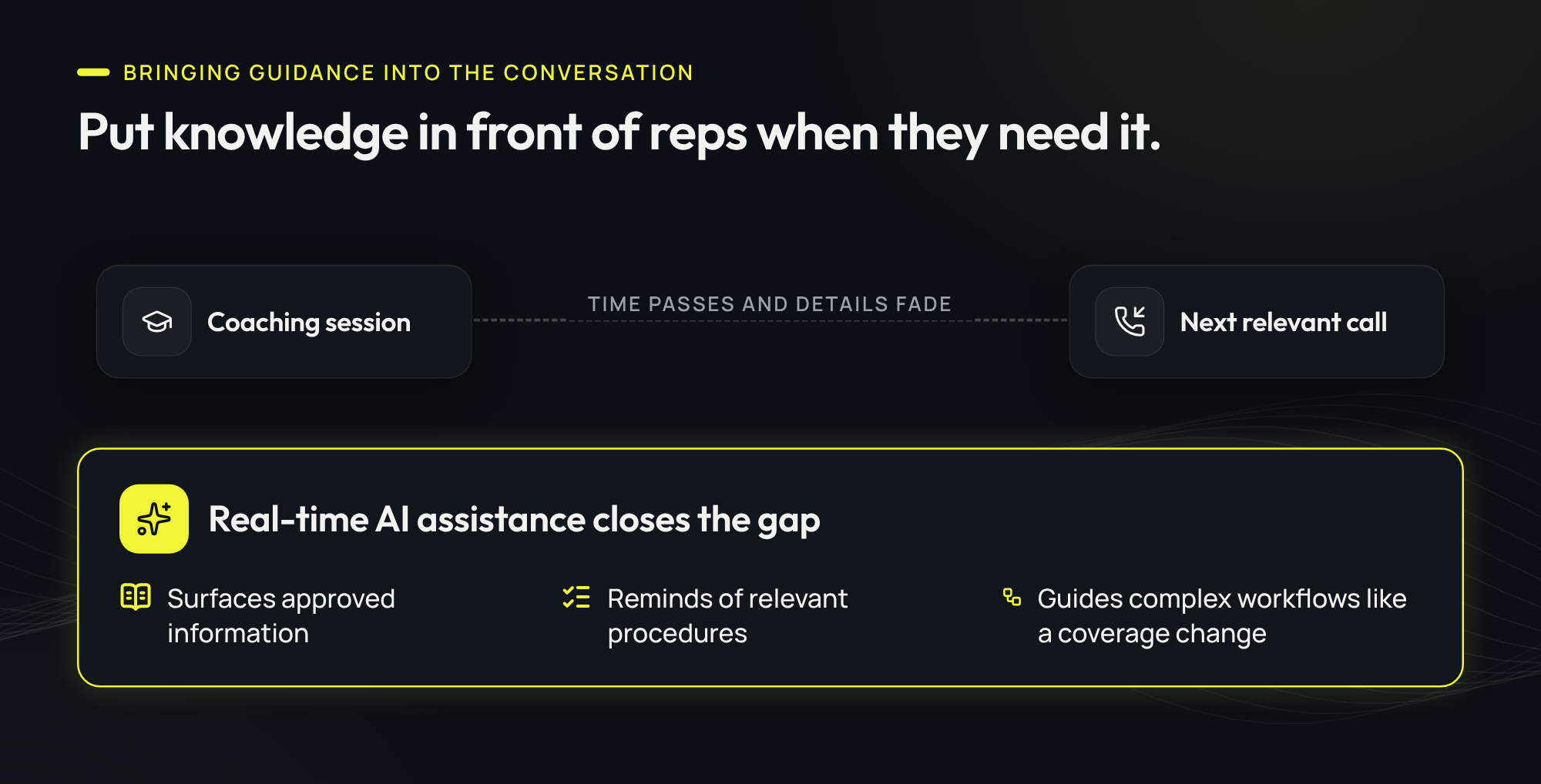
For example, when a policyholder asks about changing coverage following a major life event, real-time assistance can help the representative locate relevant policy information and follow the appropriate servicing process.
The representative remains responsible for confirming applicability, exercising judgment, and communicating with the customer.
This approach extends learning into the moment when the knowledge is most useful.
Creating a Continuous Coaching Process
One of the most promising applications of connected AI is the ability to link performance evaluation, coaching, and real-time assistance.
Quality evaluations can identify areas for improvement. AI-assisted coaching can help managers create targeted development plans. Real-time guidance can reinforce relevant practices during subsequent conversations.
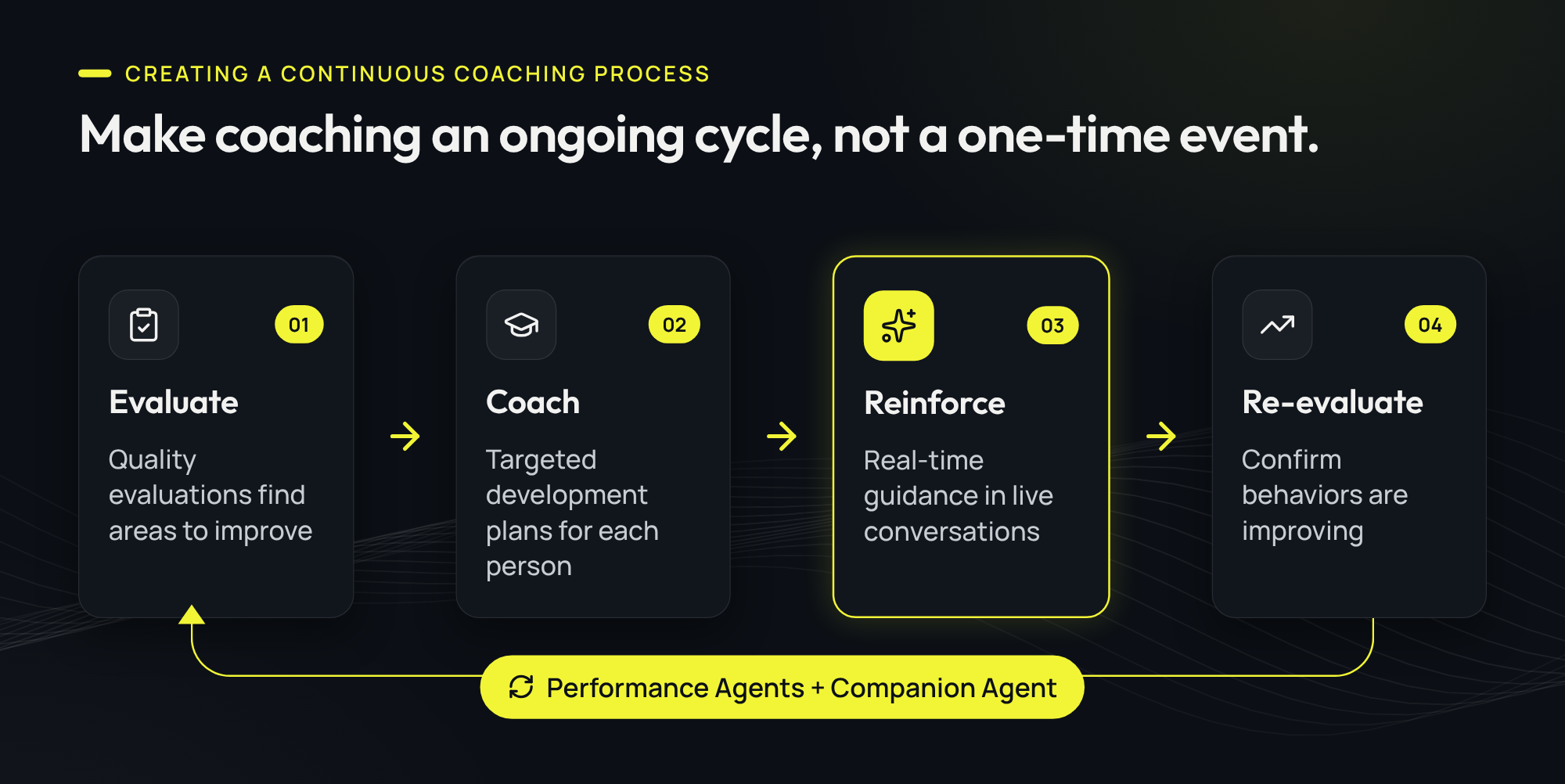
Future evaluations can then help determine whether those behaviors are improving.
This creates a more continuous approach to employee development.
Instead of treating coaching as an isolated event, insurers can make it part of an ongoing cycle informed by actual customer interactions.
Helping Every Representative Perform at Their Best
Observe.AI Performance Agents and Companion Agent help connect personalized coaching with real-time employee assistance.
For insurance organizations, this approach can support faster proficiency development, greater consistency, and more effective use of experienced employees’ knowledge.
It also creates a practical way to respond to changing insurance products, procedures, and customer expectations.
The goal is not simply to train insurance representatives more frequently. It is to make relevant knowledge and coaching available when employees need them most.
Subscribe to our newsletter.
Frequently Answered Questions