From Churn to Earn: The Contact Centers’ Impact on Customer Retention
There is a silent killer that threatens companies more than any market disruption: customer churn. Companies risked losing an estimated $846 billion in the US in 2024—not to a competitor's breakthrough product or an economic downturn but to something as seemingly manageable as customer experience. This staggering number demands immediate, strategic attention and is a major wake-up call for boardrooms across industries.
Customer sentiment analysis software gives contact centers a way to catch this risk early. By analyzing tone, word choice, and behavioral patterns across every call, chat, and email, it flags churn-risk signals such as rising frustration, repeated contact on the same issue, or a negative sentiment trend building over several interactions. These signals often appear well before a customer decides to leave, but only if someone is reviewing every conversation to catch them. That is where AI agents for operations come in, evaluating 100% of interactions instead of the small sample a QA team could manually review, and turning what they find into coaching and next-best-action guidance for agents. The result is a churn-risk radar that works continuously in the background of the contact center, not a report that surfaces problems after the customer has already gone quiet.
At the heart of this challenge lies an often-overlooked hero: the contact center. Far from being a mere cost center, these hubs of customer interaction are the frontline defenders against customer attrition, the critical point where relationships are either strengthened or irreparably damaged.
The real impact of customer departures
Losing a customer may not seem like a big deal for B2C companies. However, when a customer leaves your business, you lose more than one transaction. You part with an entire ecosystem of potential lifetime value that can impact you financially, reputationally, and strategically.
Taking the immediate financial hit out of the equation, retaining an existing customer is much more economically responsible. On average, it costs 5x less to retain an existing customer than to acquire a new one. In addition to buying more, spending more, and generating referrals, loyal customers are more forgiving of a bad customer experience and won’t switch to a competitor.
Speaking of bad experiences, every lost customer becomes a potential brand detractor. In the age of social media, online review portals, and instant communication, a single negative experience can quickly transform into a public narrative that damages your company's hard-earned brand reputation. Word-of-mouth criticism can spread faster than any marketing campaign can repair and damage a company’s name far beyond the initial interaction, reaching customers, media, analysts, and investors. As a result, businesses may experience further customer attrition, challenges acquiring new customers, and a negative impact on their share value.
Persistent churn creates a vicious firefighting cycle that stifles a company's growth potential. Resources that could be invested in product development, market expansion, or technological improvements are diverted to constant customer replacement efforts, jeopardizing a company’s stability and long-term success.
The root cause of churn
While there are many reasons customers may choose to end their relationship with a business, the one that seems to drive them to the point of no return is bad customer experience—and the contact center can play a significant role. Outdated communication technologies and inefficient interaction models create friction at every touchpoint.
Consider the typical customer journey. Today’s savvy consumers are more likely to explore the many self-serve options companies provide before connecting with a live agent. However, complex chatbots with limited functionality and robotic voice systems can leave them feeling frustrated. So by the time they finally reach a human agent, their patience is running thin, and they want an immediate resolution. At this point, agents who seem ill-equipped to handle their concerns quickly can push them toward seeking alternatives.
In an era of instant gratification, extended hold times have become more than an inconvenience. Every minute spent waiting feels like a personal insult. But it’s not just about the time lost but the message it sends. Lengthy wait times communicate a clear, albeit unintended, message: “You and your inquiry are not important enough for us to tend to immediately.”
Beyond hold time, nothing drives customers away faster than feeling their issues are unresolved. Constant transfers, incomplete answers, and a sense that agents lack comprehensive knowledge create an environment of frustration.
Lastly, personalization is no longer a luxury; it’s an expectation. Customers expect seamless, continuous experiences across all channels. They don't want to repeat their story; they want to feel understood. A disconnected omnichannel experience is like a conversation where each participant speaks a different language—frustrating, ineffective, and ultimately relationship-ending.
The transformative strategy for contact centers
The solution is not about implementing piecemeal fixes; it’s about reimagining customer interaction at every stage of their journey. Many modern contact centers tackle this by equipping their teams with AI agent assist technology that aids them with retention at every step.
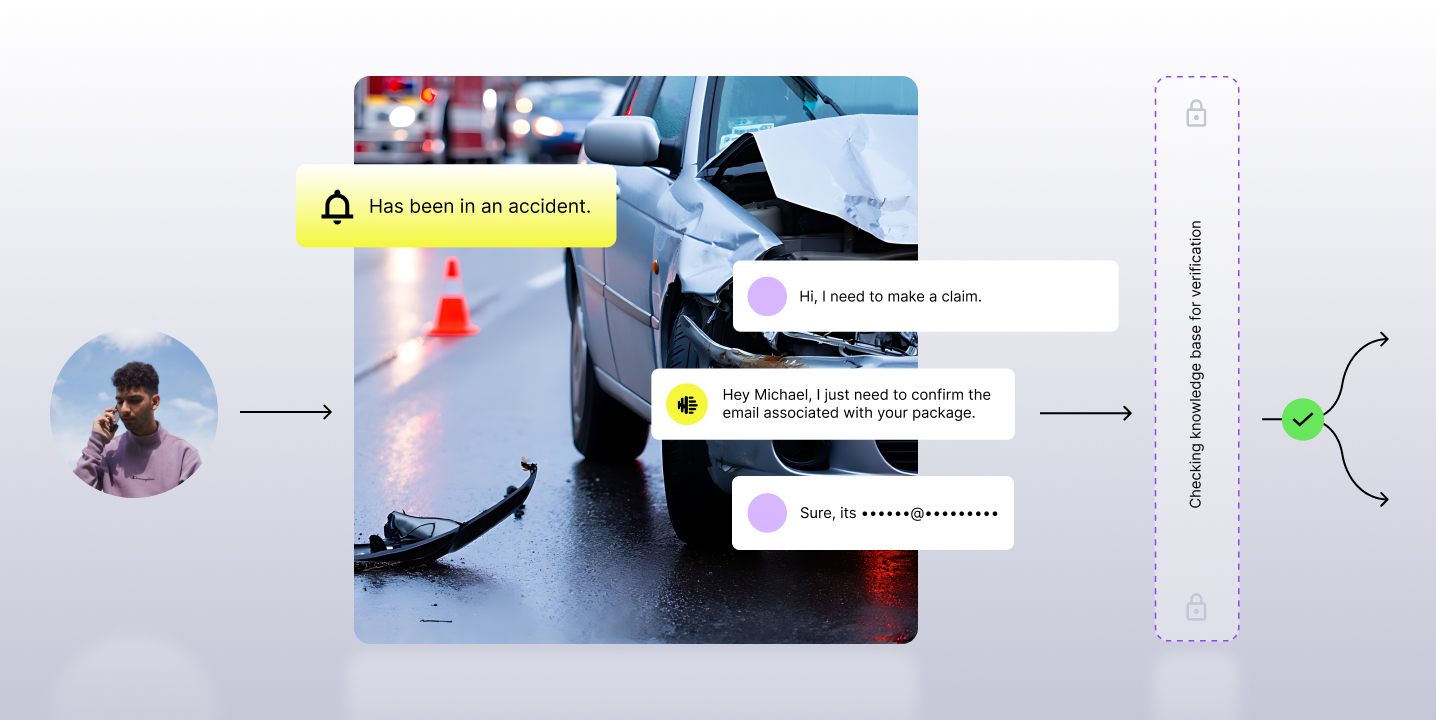
They start by performing quality assurance (QA) on every customer interaction. Through AI and automation, QA teams can quickly analyze 100% of omnichannel interaction for conversation intelligence, identify potential churn risks, and fix them through proactive outreach and incentives before they become critical. This process also helps the team identify coaching opportunities to help agents deliver better service.
Agents and sales representatives gain powerful AI tools that support them during customer interactions. From access to comprehensive knowledge bases that help provide timely and accurate responses to sentiment-based conversation prompts and upselling scripts, these tools equip the contact center team with everything they need to create positive customer experiences and build great relationships.
Lastly, AI can provide better support before a customer reaches a live agent. Chatbots and AI voice calling agents, trained on contact-center-specific data can quickly and effectively resolve many customer inquiries and continue to learn from each interaction. The goal is not to replace human interaction but to enhance it, creating a support ecosystem that is both efficient and deeply human.
Turning churn-risk signals into retention action
Detecting a churn-risk signal is only useful if it reaches someone who can act on it before the customer disengages further. AI agents for contact centers close that gap by routing flagged interactions to the right team in real time, whether that means a supervisor stepping in, a retention offer being queued, or a coaching note being added to an agent’s next 1:1. Because the same AI agents evaluate every conversation, not just a sampled few, patterns that once took weeks to surface in a QA review show up the same day they start forming. That shift, from periodic sampling to continuous signal detection, is what turns customer sentiment analysis software from a reporting tool into a proactive retention system.
Retention as a strategic initiative
The future of business success lies in its acquisition strategies and retention capabilities. Every customer retained is more than a saved sale. It’s an opportunity for a potential revenue stream, referrals, and brand advocacy waiting for you to tap into. Your contact center must transform into a relationship-building, strategic hub to achieve this.
Customer retention is a sophisticated dance of technology, empathy, and strategic insight. It requires breaking down silos between departments, creating a unified view of the customer journey, and developing an ecosystem that anticipates needs before they become problems. Investing in intelligent systems that help your strategic contact center to learn, adapt, and personalize at scale and your leadership clearly understands what customers want and need.
Check out our Revenue Growth page to learn more.
Subscribe to our newsletter.
Frequently Answered Questions
The most common churn signals include a rising volume of repeat contacts about the same unresolved issue, increasingly negative sentiment across a customer's recent interactions, longer hold times paired with visible frustration, and a drop in engagement on previously used self-service channels. Customer sentiment analysis software tracks these patterns across every conversation, so a change in tone or contact frequency gets flagged before it turns into a cancellation.
Customer sentiment analysis software analyzes the language, tone, and behavior in every call, chat, and email, then compares each interaction against a customer's own history to spot meaningful shifts. A single frustrated call may not mean much on its own, but a negative sentiment trend building across several contacts, combined with repeated calls on the same topic, is a strong early indicator of churn risk that the software can surface immediately.
AI agents for contact centers evaluate 100% of customer interactions and route flagged, at-risk conversations to a supervisor, a retention workflow, or a coaching queue in real time. Instead of waiting for a periodic QA sample to catch a pattern, teams get the signal while there's still time to respond, whether that means proactive outreach, a personalized retention offer, or a change in how an agent handles the next similar call.


.jpg)

.png)
.jpg)