The Next Era of Insurance Customer Experience: Connecting Every Step of the Policyholder Journey
Insurance has always been built on trust. From purchasing a first policy to navigating a complex claim, policyholders expect their insurer to understand their needs, provide clear guidance, and be there when it matters most.
Today, artificial intelligence presents an opportunity to strengthen that relationship at every stage of the policyholder lifecycle.
Insurance organizations have already invested heavily in digital servicing, mobile applications, self-service portals, and contact center modernization. The next opportunity is to connect these experiences so every interaction builds on the last, whether a policyholder speaks with an AI Agent, a licensed representative, or a claims specialist.
Policyholders Think in Journeys, Not Channels
Consider a homeowner who contacts their insurer after storm damage. They may begin by reporting the loss through a digital assistant, call back to confirm coverage, speak with an adjuster about next steps, and later contact the insurer for a repair update.
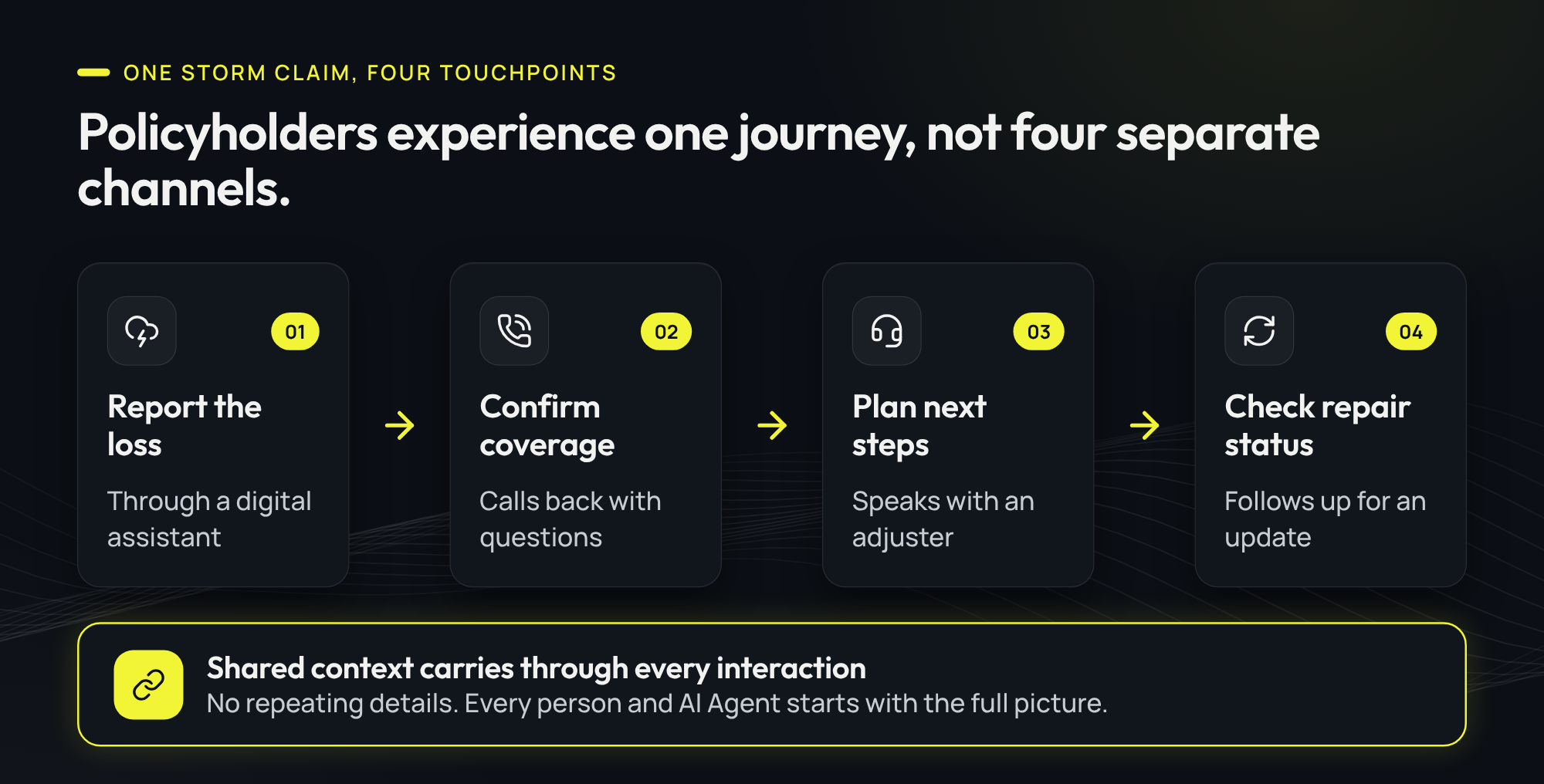
Each interaction serves a different purpose, but from the policyholder’s perspective, they are all part of one experience.
When information remains isolated between systems and teams, policyholders may need to repeat details or explain their circumstances multiple times. More importantly, representatives may lack the context required to provide relevant guidance.
Connected AI can change this dynamic by preserving conversational context and making it available throughout the service journey.
Moving Beyond Individual Automation
Much of the initial investment in insurance AI has focused on automating individual tasks. Virtual assistants answer routine questions, analytics tools review calls, and knowledge systems help representatives find information.
These capabilities deliver value independently. Their potential grows when they operate together.
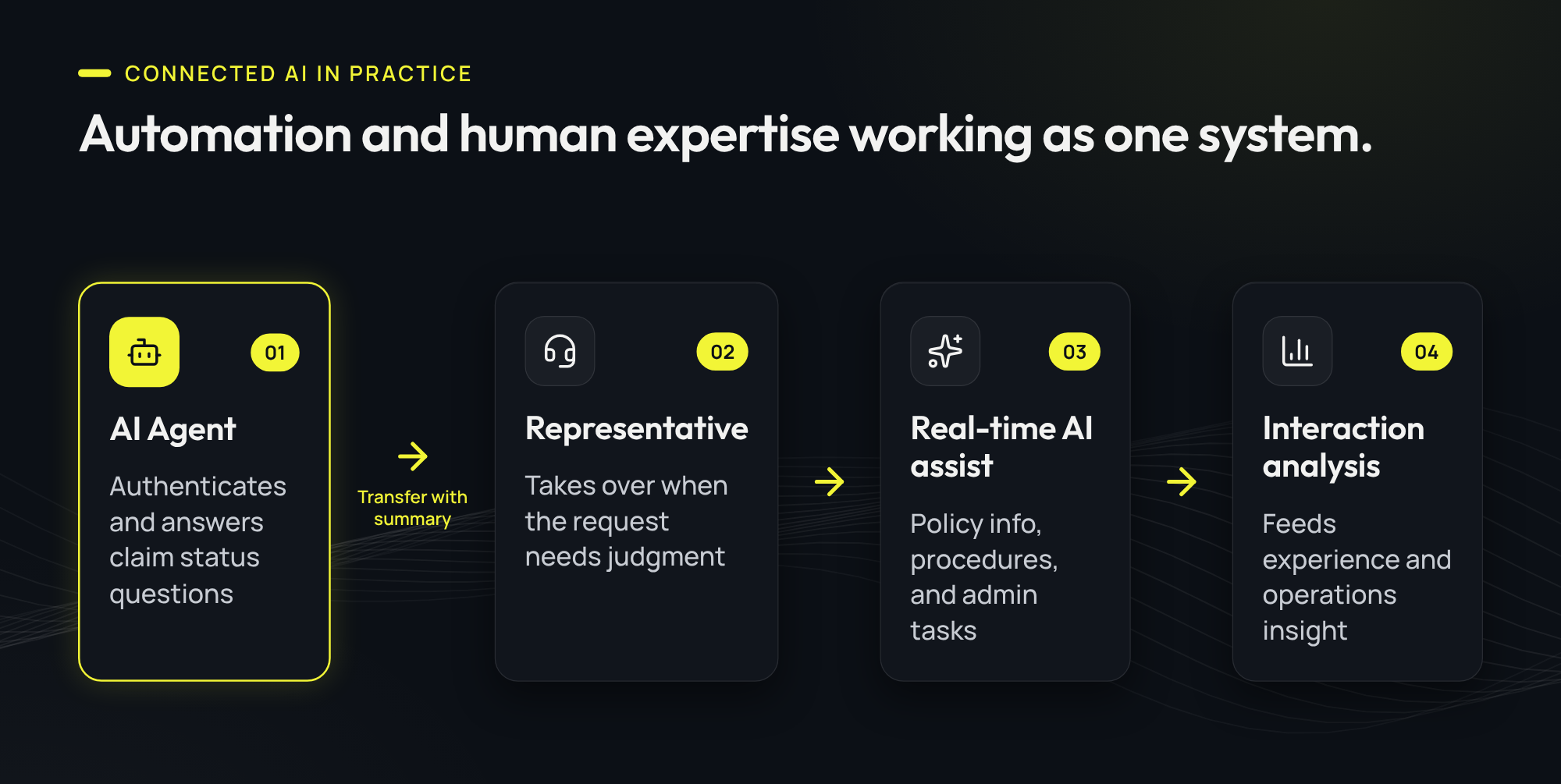
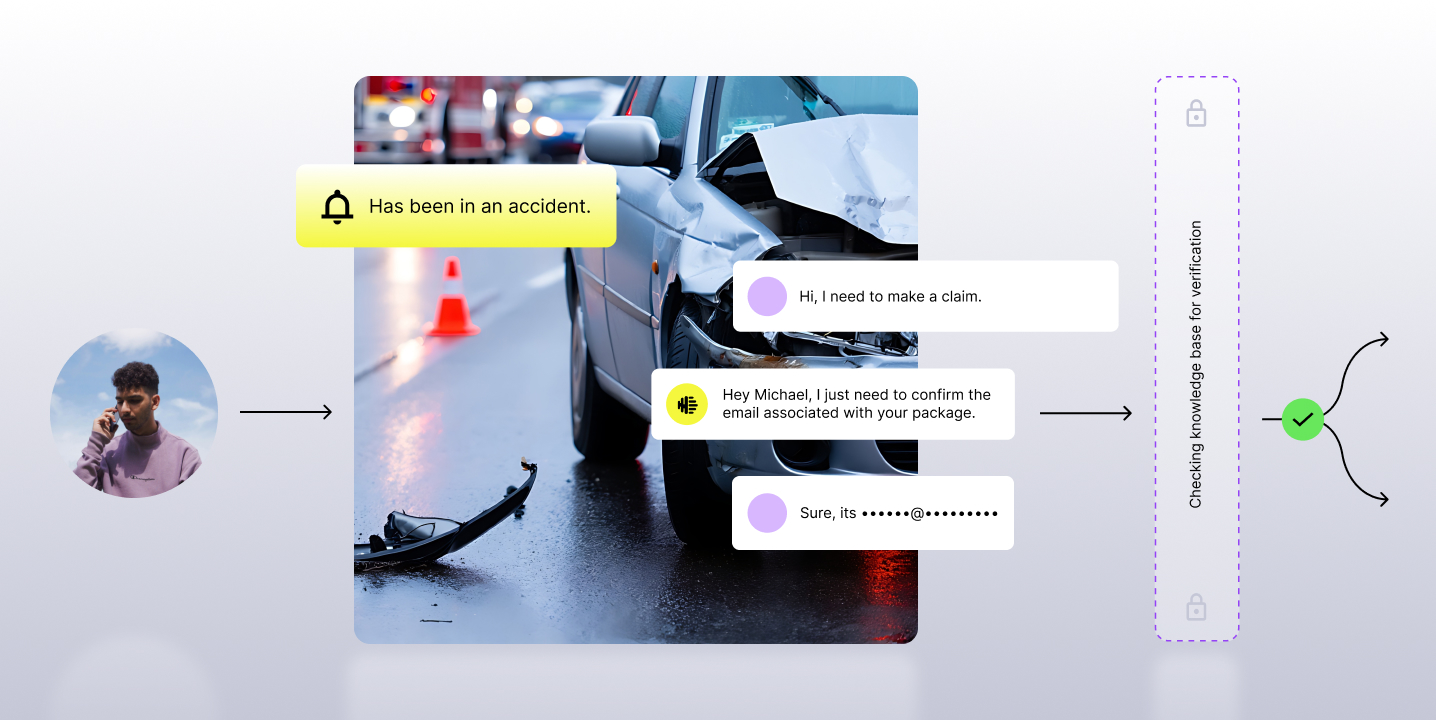
An AI Agent might authenticate a policyholder and answer questions about claim status. If the conversation requires human judgment, it can transfer the interaction to a representative with a summary of the request, relevant details, and the reason for escalation.
During the conversation, AI can help the representative identify relevant policy information, follow service procedures, and complete administrative tasks. Afterward, the interaction can contribute to broader analysis of policyholder experiences and operational performance.
The result is an operating model in which automation and human expertise complement one another.
Making Every Conversation a Source of Improvement
Policyholder interactions contain valuable information about the insurance business itself.
Recurring questions about deductibles may signal that policy documentation needs clarification. An increase in calls following a renewal notice may reveal opportunities to improve communications. Repeated claims escalations may indicate a process requiring attention.
Traditionally, these observations depend on surveys, manual reviews, or periodic operational reporting.
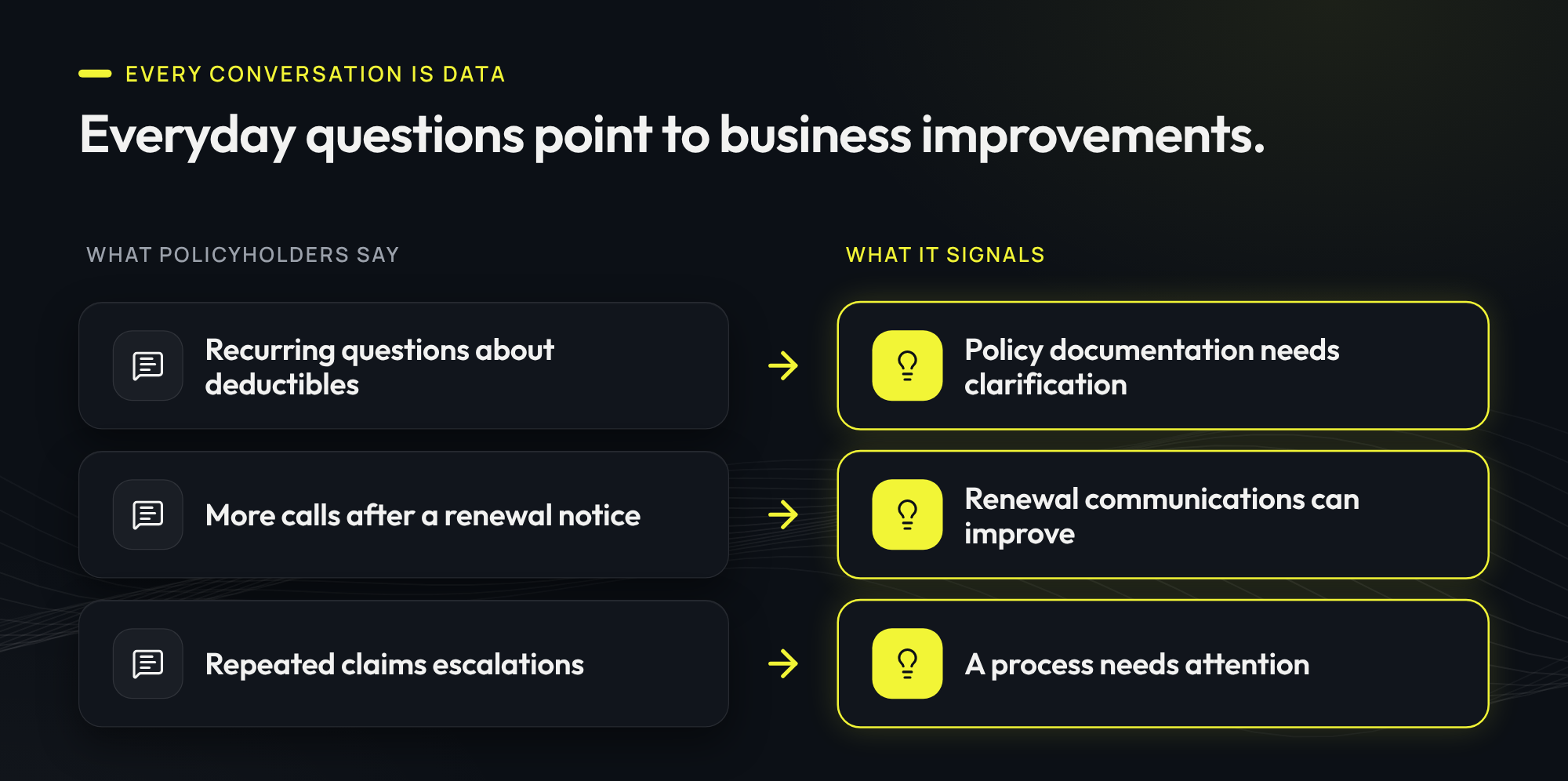
AI-powered interaction intelligence lets insurers examine conversations more thoroughly and spot patterns that might otherwise go unnoticed.
These findings can inform service improvements, communications, employee development, and business decisions beyond the contact center.
The Opportunity for Insurance Leaders
The future of insurance customer experience is not about removing people from the process. It is about using technology to make every interaction more informed, efficient, and appropriate for the situation.
At Observe.AI, we believe this requires connected AI across customer-facing automation, frontline employee assistance, and operational intelligence.
When these capabilities share context, insurers can deliver consistent experiences while continuously learning from the conversations that matter most.
The opportunity is to move beyond improving individual interactions and start improving the entire policyholder journey.
Subscribe to our newsletter.
Frequently Answered Questions