The Moment That Matters: Why Human Expertise Still Defines the Insurance Claims Experience
Insurance claims represent a defining moment in the relationship between an insurer and a policyholder.
When someone reports a vehicle accident, property damage, or a serious personal loss, they are often navigating unfamiliar circumstances. They need timely information, clear expectations, and confidence that their situation is being handled appropriately.
Digital claims capabilities have made meaningful progress. In J.D. Power’s 2026 U.S. Property Claims Satisfaction Study, customer satisfaction improved as repair and payment cycle times shortened and digital capabilities advanced.
But claims experiences involve more than transaction speed.
The next opportunity is helping claims teams combine efficient processes with informed, empathetic conversations.
Claims Conversations Require More Than Information
A policyholder calling about a claim may ask a straightforward question about documentation or payment status.
The same conversation can quickly become more complex.
They may not understand their deductible, disagree with a settlement estimate, or express concern about how long repairs will take.
In those moments, the representative must do more than retrieve information. They need to listen, explain complex details clearly, follow appropriate procedures, and determine the next best action.
This requires experience and judgment, particularly when claims involve significant financial or personal consequences.
AI can help by reducing the administrative and informational burden surrounding these conversations.
Giving Claims Representatives the Right Context
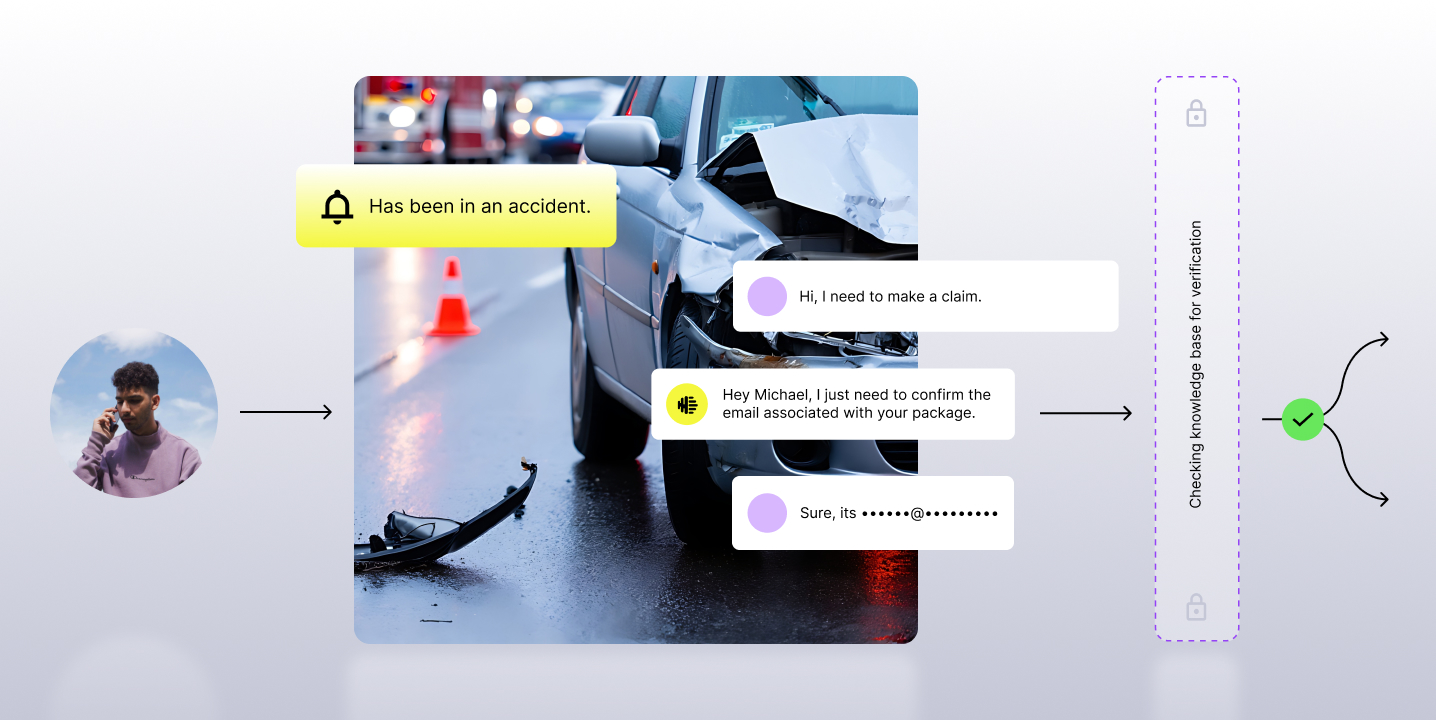
Imagine a policyholder who has already reported a loss through an AI Agent and now needs to discuss a complicated coverage question with a claims representative.
In a disconnected environment, the representative may need to reconstruct the interaction, ask the customer to repeat information, and search multiple systems before offering guidance.
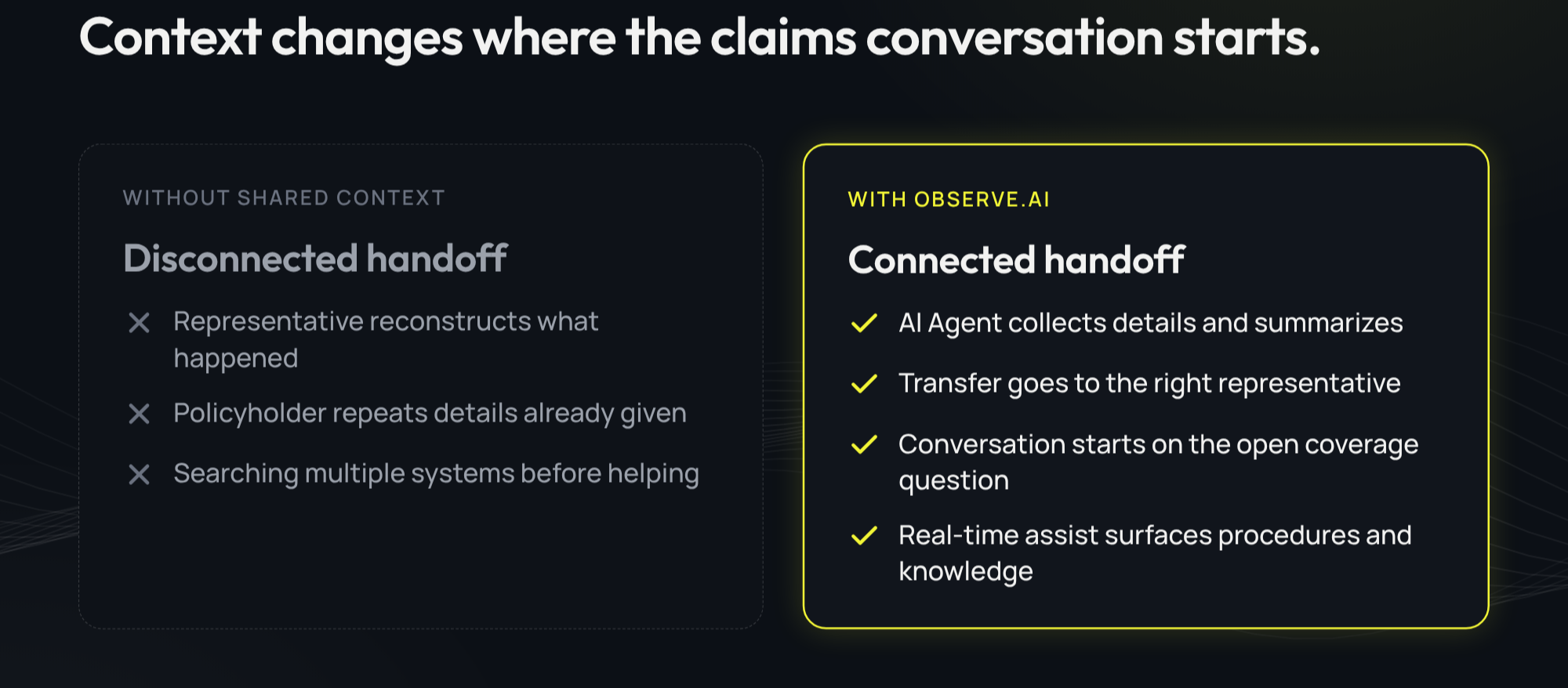
A connected approach creates a different starting point.
The AI Agent can collect relevant details, summarize the interaction, and transfer the policyholder to the appropriate representative.
With that context available, the representative can focus on understanding the outstanding issue rather than gathering information already provided.
During the conversation, real-time AI assistance can surface relevant procedures, provide approved knowledge, and help the representative manage complex workflows.
This support can be especially valuable for employees handling unfamiliar claim scenarios or navigating changes in internal procedures.
Supporting Empathy Without Scripting It
Insurance companies consistently emphasize empathy in claims handling, but delivering it requires more than a standard script.
Different circumstances call for different responses.
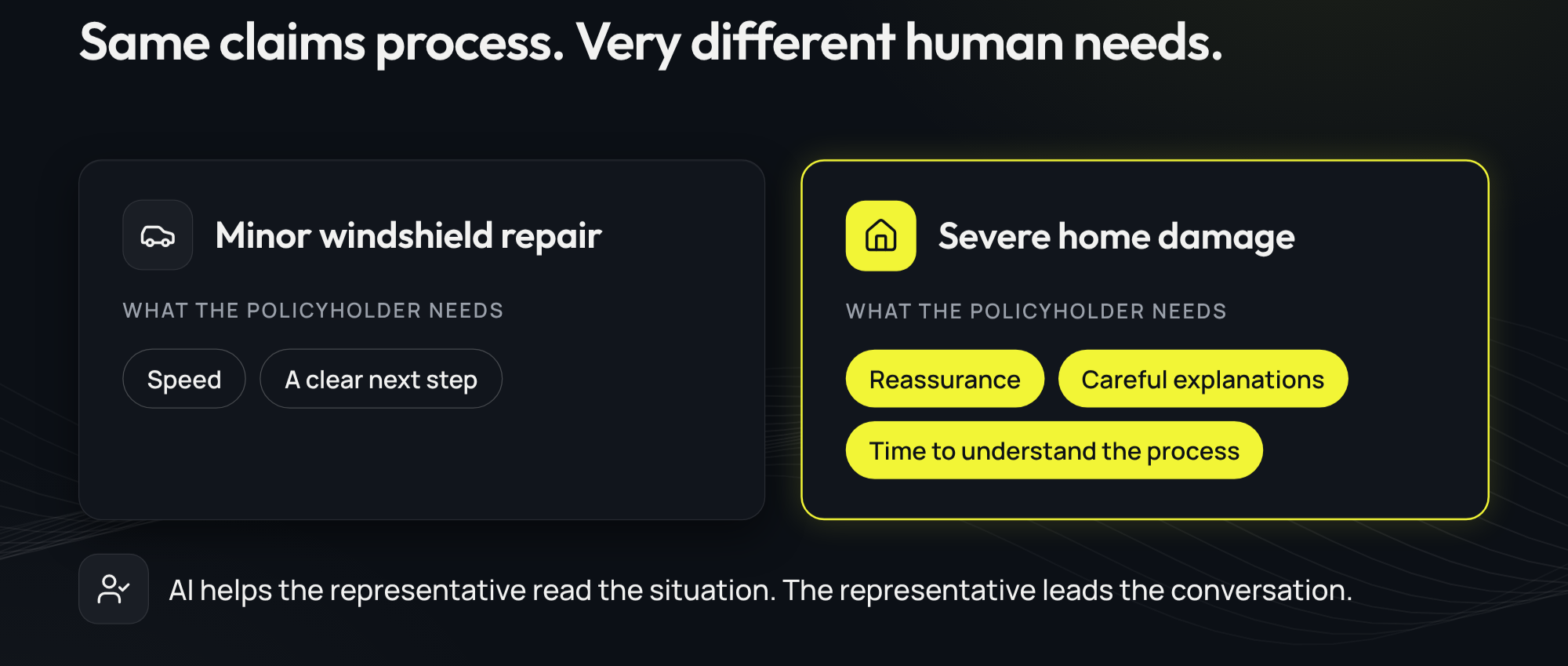
A customer dealing with a minor windshield repair may primarily value speed. Someone whose home has experienced severe damage may need reassurance, careful explanations, and additional time to understand the process.
AI should support representatives in recognizing these differences, not dictate a mechanical response.
Real-time guidance can help representatives identify when clarification is needed, remember important procedural steps, and avoid missing relevant information.
The human representative remains responsible for the conversation and any decisions requiring professional judgment.
Learning From Every Claims Interaction
Claims conversations also provide insurers with valuable operational intelligence.
Are policyholders repeatedly calling because they do not understand settlement timelines? Are specific claim types generating more escalations? Are representatives consistently encountering questions about exclusions?
Interaction intelligence can help insurers examine these patterns across conversations.
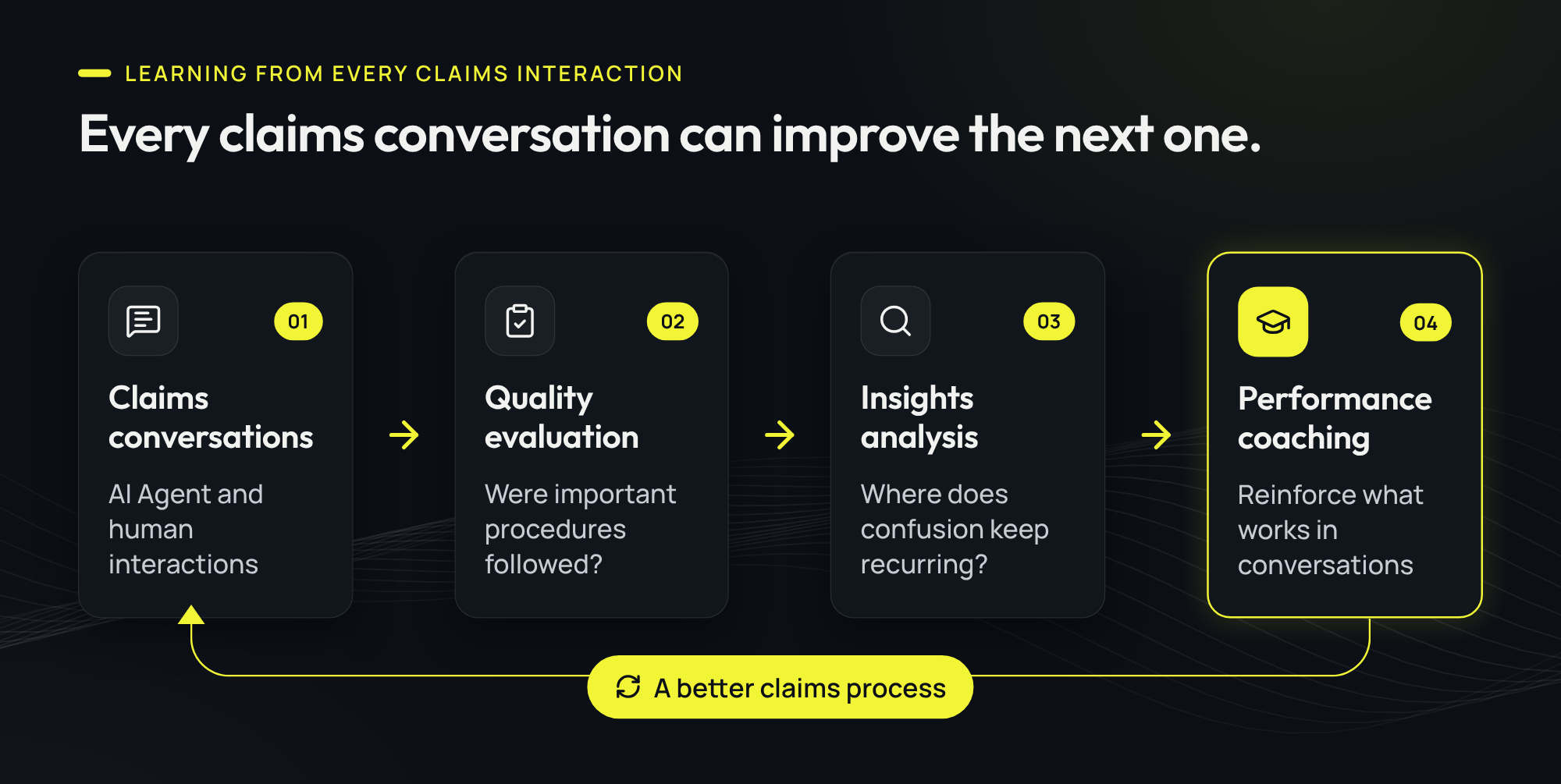
Quality evaluation can identify whether important procedures were followed. Insights analysis can reveal recurring sources of confusion. Performance coaching can help managers reinforce effective communication practices.
Together, these capabilities create opportunities to improve the claims process itself, not simply the performance of individual representatives.
The Future of Claims Is Human Expertise Supported by AI
Observe.AI connects VoiceAI and Companion Agent to support the transition from automated service to human assistance, while Interaction Intelligence helps claims organizations understand and improve those experiences.
For insurance leaders, the opportunity is significant.
By removing unnecessary administrative work, preserving context, and providing relevant guidance, AI can help claims professionals dedicate more attention to the moments that require their expertise.
The future of claims service is not a choice between automation and empathy. It is using automation to make more room for empathy.
Subscribe to our newsletter.
Frequently Answered Questions