AI Voice Agents for Customer Service: A Practical Playbook
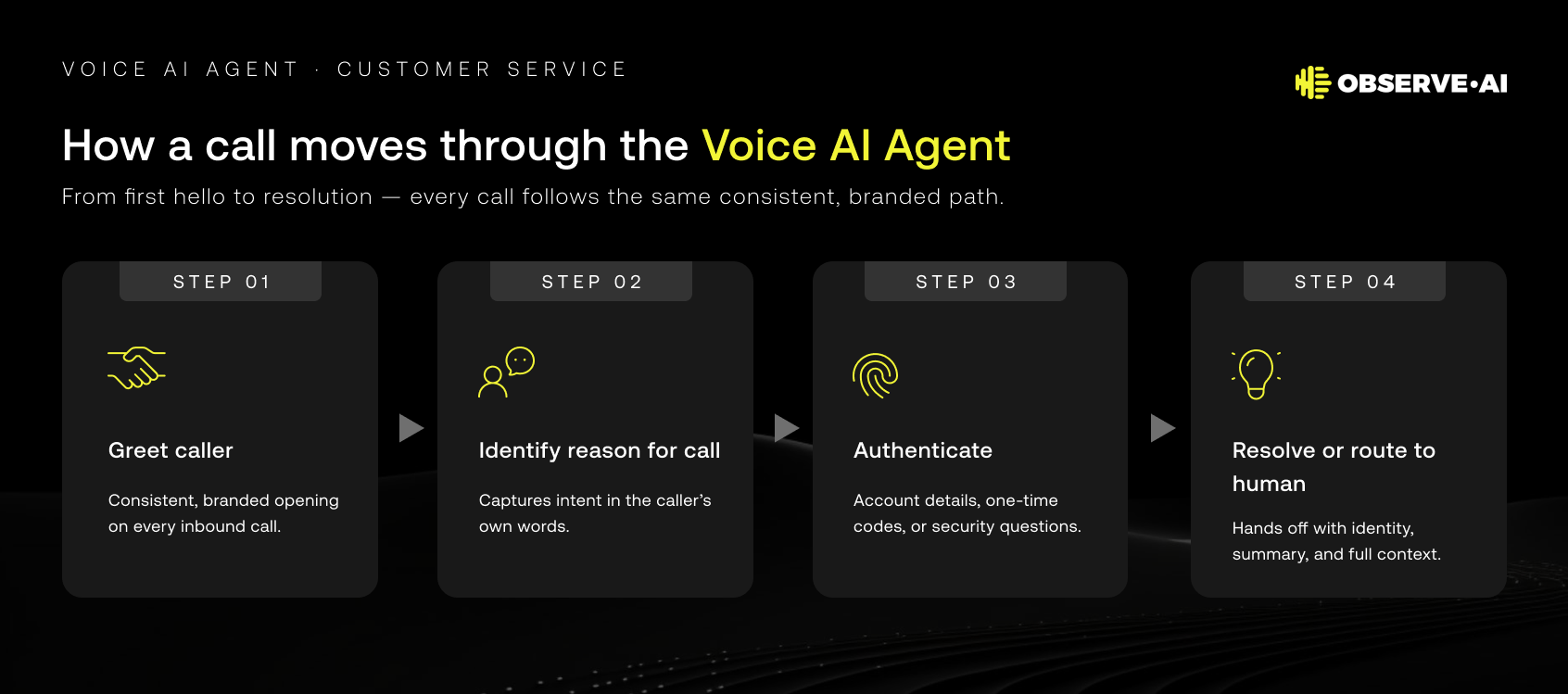
An AI voice agent is a real-time conversational system that answers inbound calls, understands customer requests, and responds naturally. It can:
- Greet callers with a consistent, branded opening
- Identify the reason for each call
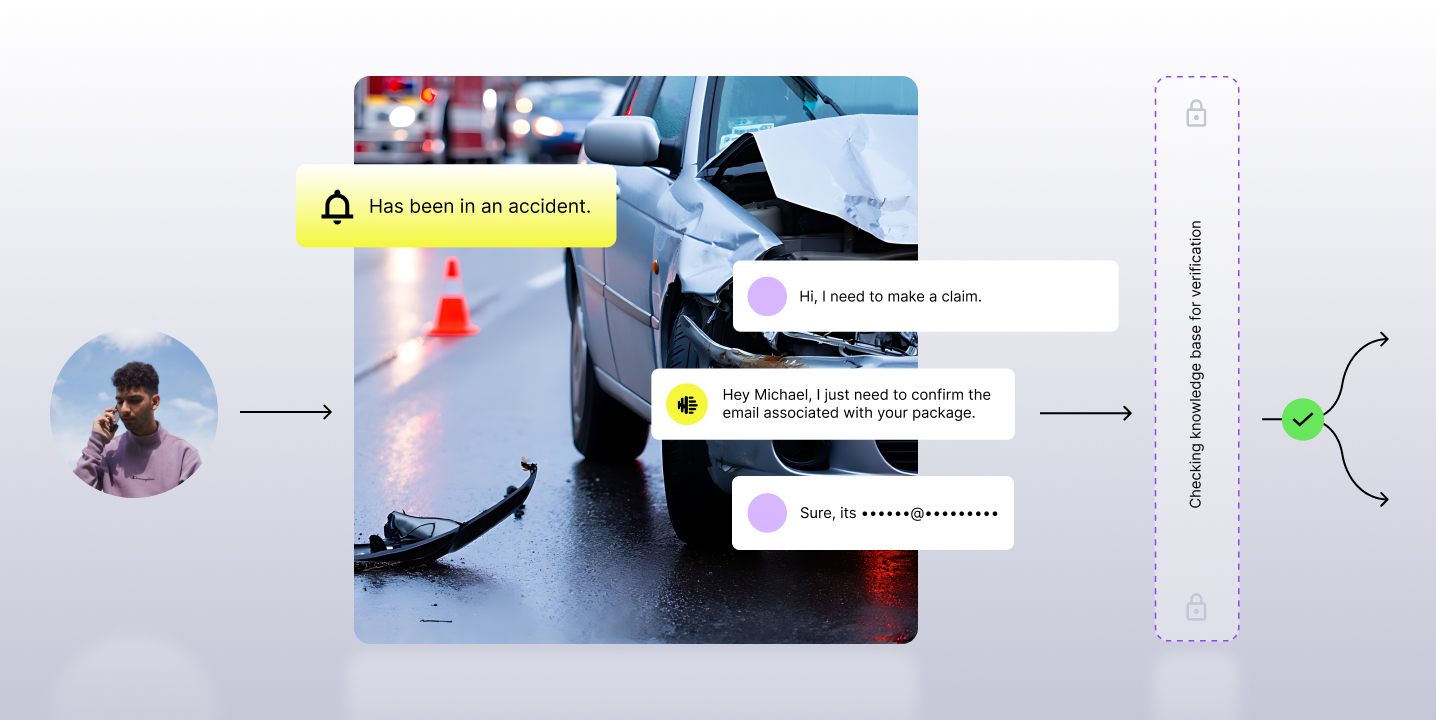
- Authenticate customers using account details, one-time codes, or security questions
- Resolve issues or transfer callers to the right human agent with full context
Because AI agents work 24/7, they can handle call spikes, after-hours requests, and routine questions without overwhelming support teams.
Resolve Routine Issues Through Natural Conversation
Traditional IVR systems rely on rigid menus such as “Press 1” or “Press 2.”
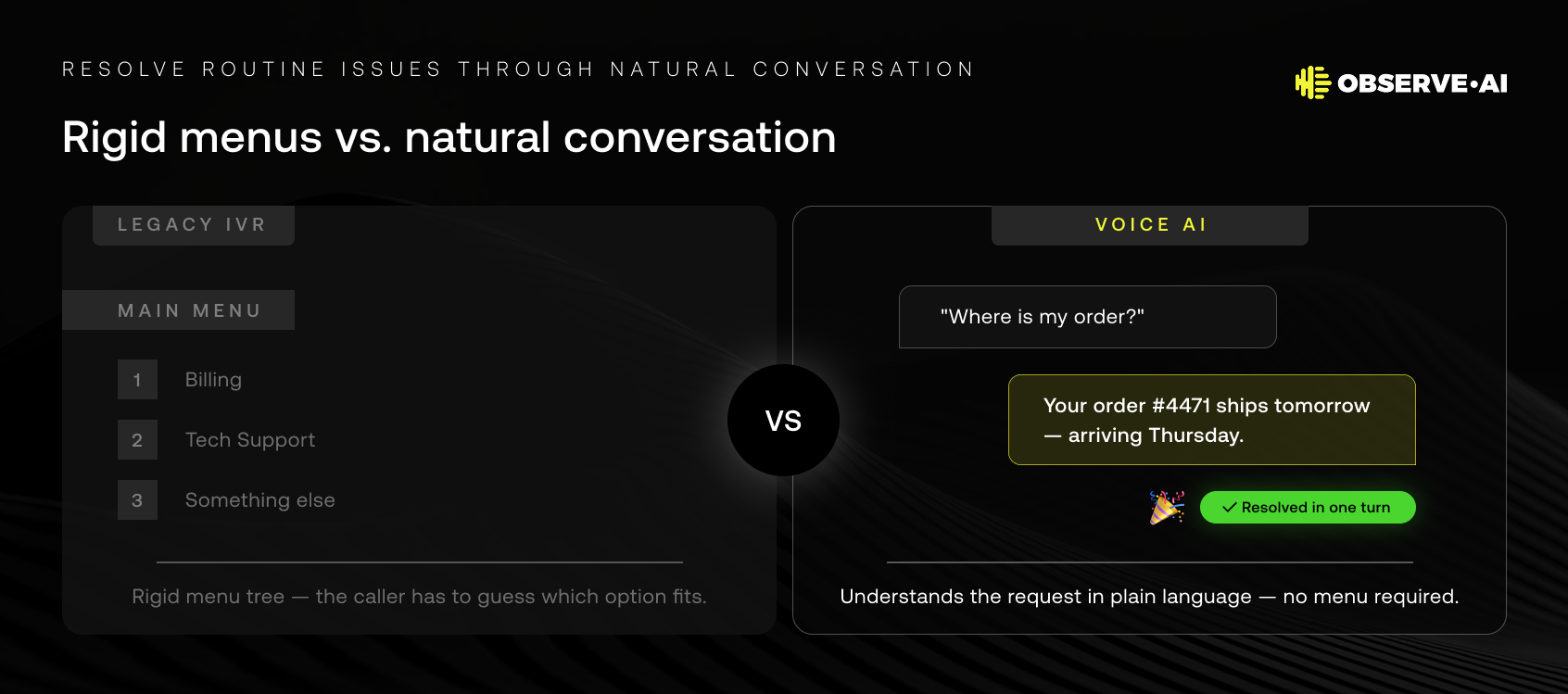
Voice AI understands natural requests like “Where is my order?” or “I need to change my appointment.” It can identify important details and:
- Look up information in CRM, help desk, or order systems
- Update account data and preferences
- Trigger emails, SMS confirmations, and password-reset links
Conversational self-service helps customers get answers faster and reduces unnecessary transfers to human agents.
Escalate Complex Cases with Full Context
Some situations require human empathy and judgment. An effective AI agent should recognize frustration, identify requests outside its capabilities, and offer a live-agent handoff.
During an escalation, it can pass along the caller’s identity, verification status, conversation summary, and completed actions. Human agents can then continue the conversation without asking customers to repeat themselves.
Why Support Teams Use Voice Automation
Reduce Wait Times and Missed Calls
During peak periods or unexpected incidents, AI voice agents can answer every call immediately. Even when they cannot resolve an issue, they can:
- Capture the caller’s intent
- Provide basic updates
- Offer a callback
- Direct customers to digital self-service
This reduces abandoned calls and helps customers feel heard.
Handle Repetitive Requests at Scale
Common requests—including order tracking, password resets, billing questions, appointment changes, and FAQs—are well suited to voice automation.
Once connected to the right systems, AI agents can handle these workflows consistently while reducing:
- The cost of routine contacts
- Policy errors and inconsistencies
- Repetitive workloads and agent burnout
Free Agents to Focus on Complex Issues
Automation allows human agents to concentrate on high-impact interactions, including retention, high-value accounts, complex troubleshooting, and product feedback.
This can improve employee satisfaction, customer outcomes, and scalability without requiring headcount to grow at the same rate as call volume.
AI voice agents are not simply replacements for support teams. They are force multipliers that handle routine work while humans focus on situations requiring judgment and empathy.
Customer Service Workflows AI Voice Agents Can Handle

Why it helps: This section carries several long bullet lists; a single visual makes the "what it can do" scannable and improves dwell time.
Order Status and Account Questions
With secure access to order, CRM, and account systems, an AI agent can:
- Check order and delivery status using an order ID, email address, or phone number
- Confirm balances, subscription renewals, and loyalty points
- Update contact preferences or shipping addresses after verification
- Send confirmations by SMS or email
Billing, Refunds, and Appointment Changes
With clear policies and escalation rules, AI agents can:
- Explain charges and upcoming invoices
- Process simple refunds or credits within approved limits
- Update payment methods and billing addresses
- Reschedule, cancel, or confirm appointments
- Send automated confirmations and reminders
Exceptions and sensitive cases can be routed to human agents. This preserves financial controls while speeding up routine support.
Call Routing, Authentication, and Escalation
AI voice agents can act as intelligent front doors for contact centers by:
- Identifying customers through phone matching, account lookups, or multifactor authentication
- Understanding requests in natural language
- Routing calls by skill, language, priority, or customer segment
- Offering self-service when appropriate
When human assistance is needed, the AI passes along the caller’s information and conversation context. This eliminates repetitive questions during the handoff.
How AI Voice Agents Fit into the Support Stack
CRM and Help Desk Integrations
Connecting an AI agent to your CRM, help desk, or ticketing platform enables it to:
- Verify customer records
- Create and update tickets during calls
- Add transcripts or summaries to customer profiles
- Trigger follow-up tasks and workflows
Writing structured data back to existing tools gives support teams a unified view of customer interactions across AI- and human-led conversations.
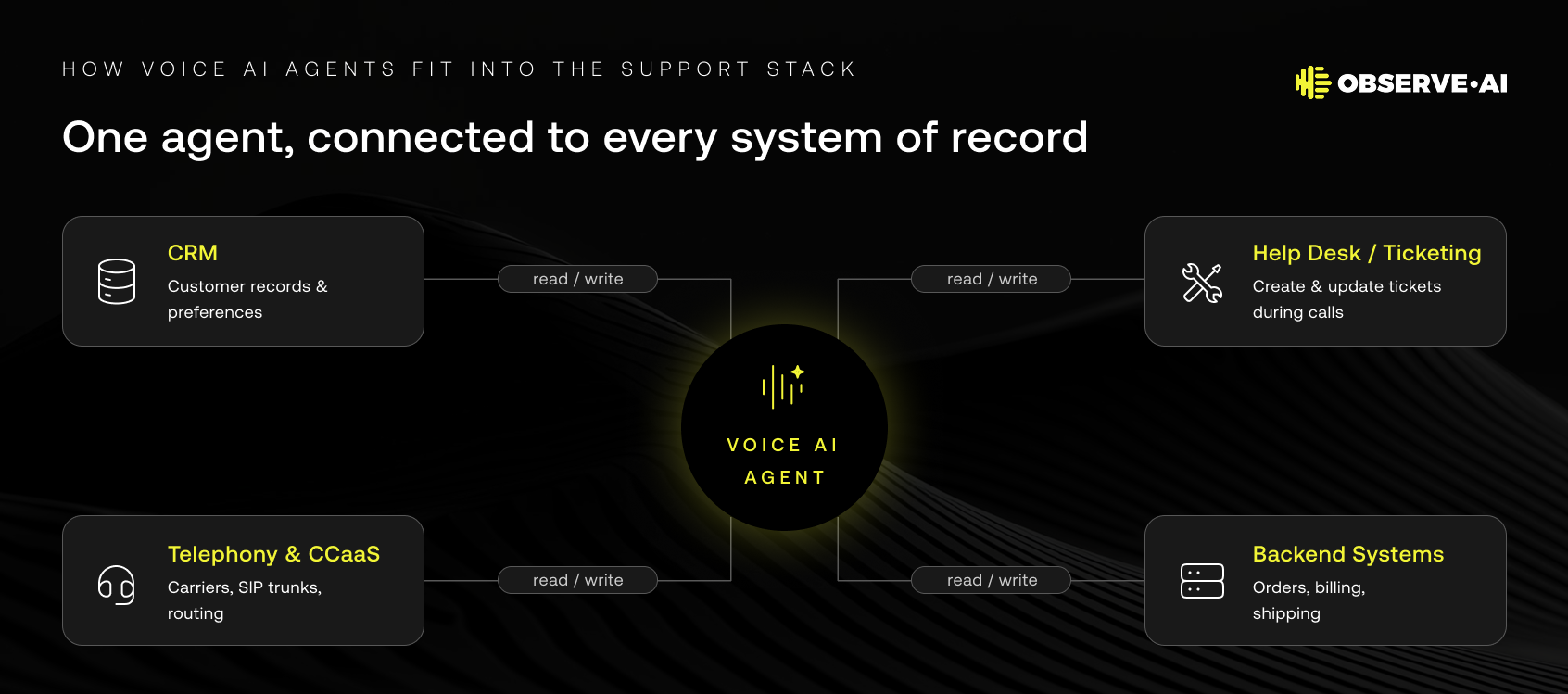
Telephony and Contact Center Compatibility
AI voice agents can work alongside existing telephony and contact-center platforms. They may:
- Answer calls directly
- Replace or enhance IVR menus
- Operate as virtual agents within a CCaaS platform
- Assist human agents during live calls
Compatibility with carriers, SIP trunks, and contact-center systems is essential for consistent routing, recording, reporting, and deployment.
Backend Actions and Workflow Automation
With the right integrations, AI agents can:
- Place or modify orders
- Update account information
- Send emails, text messages, and internal notifications
- Start workflows for onboarding, cancellations, or dispute investigations
This transforms phone support into self-service that completes tasks—not just answers questions.
Security, Reliability, and Deployment
Compliance and Data Handling
When evaluating vendors, review how each platform:
- Stores, encrypts, and controls access to call audio and transcripts
- Masks, redacts, or tokenizes personally identifiable information
- Supports data-retention policies
- Handles consent, recording controls, and audit logs
Make sure the platform meets all applicable privacy, financial, health, and industry-specific requirements.
Latency, Voice Quality, and Call Stability
A reliable AI voice agent should provide fast responses, natural-sounding speech, and stable calls during traffic spikes, handoffs, and backend delays.
It should also handle interruptions by:
- Stopping or shortening its response when the caller speaks
- Distinguishing interruptions from background noise
- Preserving information the caller has already provided
- Confirming revised requests
- Recovering smoothly when both parties speak at once
Test performance across different geographies, networks, and use cases. Many organizations begin with one limited workflow or customer segment before expanding.
Human Handoff and Operational Control
Support leaders should be able to:
- Configure escalation rules
- Set policies for sensitive topics, high-value customers, and different languages
- Monitor containment, satisfaction, and average handle time
- Pause, roll back, or update workflows without code where possible
Continuous optimization helps teams expand automation safely as performance data and confidence improve.
Frequently Asked Questions
What Is an AI Voice Agent for Customer Service?
An AI voice agent is an AI-powered conversational system that answers phone calls, interprets spoken requests, and responds using natural language.
Unlike traditional IVR, it supports free-form conversation, connects to backend systems, and works alongside human agents to provide scalable support.
Can an AI Voice Agent Replace an IVR System?
Often, yes. Organizations can replace rigid menus with natural-language routing and self-service. They can also use a hybrid model in which IVR handles basic selections while AI manages the conversation.
The best approach depends on call volume, customer needs, and the existing telephony stack.
How Does AI Voice Agent Pricing Usually Work?
Common pricing models include:
- Usage-based: Charges per minute, call, or AI-handled interaction
- Seat- or license-based: Charges for concurrent sessions or virtual agents
- Hybrid or bundled: AI is included in a broader contact-center or customer-service platform
Compare total value—not just the unit price—by considering call deflection, shorter handle times, and reduced hiring needs.
How Does Escalation to Human Agents Work?
Escalation may be triggered when:
- A customer asks to speak with an agent
- The system detects frustration or repeated misunderstandings
- A predefined rule applies, such as a high-value customer or sensitive issue
The AI routes the call with the customer’s identity, conversation history, and completed actions. The human agent can then continue smoothly without making the customer repeat the issue.
Used well, AI and human support create an experience that is efficient for routine needs and empathetic when it matters most.
Subscribe to our newsletter.
Frequently Answered Questions